
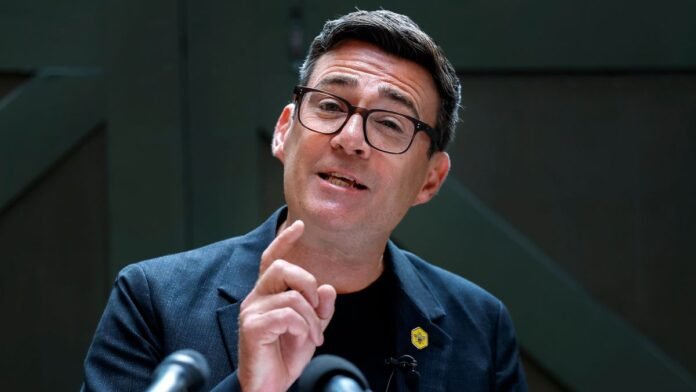

Andy Burnham has pledged to embark on the most extensive council house construction initiative since the post-war period while presenting his strategy for governance.
During his first address after Keir Starmer announced his resignation, the potential Prime Minister highlighted a housing dilemma, noting a decrease of nearly 1.5 million council homes since the 1980s due to Margaret Thatcher’s Right to Buy policy. Burnham criticized the impact of this crisis on public finances, particularly the local housing allowance freeze, which he claimed leads to homelessness and increased costs for temporary accommodations.
He announced plans to develop new homes on unused public land to replicate the housing boom post-World War II, managed by a new No10 North operation located in Manchester. Although specific figures were not provided, Burnham previously indicated a goal of constructing half a million social homes by 2030.
This commitment comes as Burnham outlines his vision for governance, with his distinctive focus on restructuring the country’s administration. He emphasized a substantial redistribution of power to enhance people’s welfare and enhance essential services over a decade.
The proposed No10 North unit will serve as the central hub for reinvigorating Britain, concentrating on industrial redevelopment, utility reforms, and rejuvenating neglected communities. Burnham stressed the importance of empowering mayors and local leaders, advocating for a bottom-up approach to nurture growth rather than top-down directives.
In his address in Manchester, Burnham reminisced about the significance of a secure home and quality technical education for working-class aspirations, lamenting their erosion over the years. He emphasized the need to revamp the education system to offer diverse pathways beyond university, aiming to provide better support for the upcoming generation.
Addressing the crisis of unemployed youth, Burnham proposed devolving employment support to mayors to assist jobless youngsters and integrating mental health services into workplace support. He also committed to revising business rates to revitalize pubs and high street businesses, aiming to revitalize town centers.
While outlining a ten-year mission to elevate living standards, Burnham emphasized the urgency of immediate relief for the public. He pledged to address rising costs and provide hope for families, envisioning a future with reduced energy expenses and widespread economic growth.
Amid speculations about his potential Cabinet, Burnham announced that he would delay revealing his top team until the leadership race concludes. If uncontested, he is set to assume the Labour leadership on July 17, followed by his entry into Downing Street on July 20.