
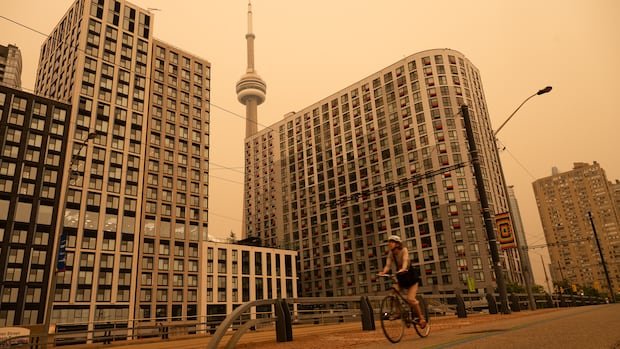

Canadians are advised to prepare for a future that could be 5 degrees Celsius warmer, as per a recent report presenting the latest climate change findings. The second edition of the Canada’s Changing Climate Report, which consolidates scientific insights into how a warming planet affects Canadians, confirms that human activities, particularly the burning of fossil fuels, are the primary drivers of climate change. Released by the federal government on Thursday, the report looks ahead to different scenarios for Canada based on global climate commitments.
Nathan Gillett, a research scientist at Environment and Climate Change Canada and one of the report’s authors, emphasized the importance of current emissions levels in influencing future temperature trends. The report highlights that if countries maintain their existing climate policies, Canada will experience significant warming, leading to a less favorable climate outlook. It projects a potential 5-degree temperature rise by 2081-2100, with winter warming in Nunavut possibly surpassing 10 degrees Celsius.
Notably, the report predicts that glaciers in western Canada could lose over 75% of their ice, and there is a more than 60% chance of the central Arctic Ocean being ice-free during most Septembers. The changing climate landscape will have far-reaching implications, with iconic glaciers in western Canada expected to vanish by the end of the century.
In addition to significant warming in northern regions, southern Canada faces challenges, including prolonged and intensified summer droughts, as well as more frequent flash floods and atmospheric rivers. The report underscores that the length of the fire season in Canada has already increased and is likely to continue growing due to rising global temperatures.
Should countries abandon their climate policies, the report warns of an even steeper temperature increase of 6.9 degrees Celsius in Canada this century. Conversely, achieving net-zero greenhouse gas emissions by around 2075 could stabilize Canada’s climate, limiting the average temperature rise to 3.5 degrees Celsius.
Despite the alarming projections, the Canadian Climate Institute emphasizes that the future is not predetermined, and there is still room to avert the worst outcomes. The institute stresses that reducing emissions globally and in Canada will play a crucial role in determining the extent of future warming and its impacts on society, emphasizing the potential for saving lives, protecting communities, and preserving the economy.
In response to the report, a climate advocacy group called for intensified efforts to cut emissions, drawing a connection between Toronto’s recent flash flooding and climate change. They highlighted the necessity of urgent action to combat climate breakdown and mitigate its adverse effects on communities and infrastructure. Canada’s environment minister reaffirmed the government’s commitment to emission reduction and achieving net-zero status by 2050, underscoring the importance of combating climate change while fostering energy security and sustainable industrial growth.