
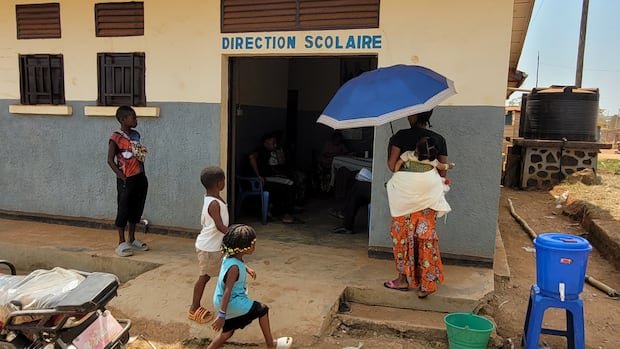

A fresh academic year kicked off in the Democratic Republic of Congo on Tuesday, despite concerns from parents and teachers about the ongoing Ebola outbreak in the region posing risks to children at the epicenter.
The return to classes coincides with a rapidly spreading outbreak. Government figures show that as of Tuesday, 2,950 individuals have succumbed to the virus out of 6,100 confirmed cases since mid-May.
While the teachers’ union in Ituri province, the outbreak hotspot, had called for a delay in reopening schools, the government proceeded with the resumption. UNICEF announced its support to the authorities in implementing measures to prevent transmissions within school premises.
Some schools in Ituri, particularly those under government ownership, reported low attendance rates. There was no official response from Ituri authorities regarding steps taken to prevent transmission in classrooms.
A parent in Bunia, Ituri’s capital, Aimerance Vahweka, expressed surprise at the sudden school reopening and decided to keep her child at home for the time being, citing insufficient prevention measures.
Education officials mentioned equipping schools with noncontact infrared thermometers, hand sanitizers, and hand-washing stations. Etienne Ndjabu, a teacher at a private school in Bunia, emphasized raising student awareness about adhering to hygiene protocols, including regular handwashing and using hand sanitizer.
Despite these efforts, challenges persist as many schools lack access to clean water, and funding falls short of targets, according to Greg Ramm, the director for Save the Children in Congo.
Children aged four and below have the highest fatality rate in the outbreak, at 60%, based on available health data.
Dounia Dekhili, UNICEF’s emergency coordinator in the country, highlighted the importance of safeguarding the health of students, teachers, and communities while ensuring children’s right to education.
The current outbreak, caused by the rare Bundibugyo virus, is the fastest in history and has spread to over 60 health zones. Health authorities suspect that the virus had been circulating undetected in communities since at least February. The World Health Organization (WHO) warned that the outbreak is on track to surpass the regional outbreak in West Africa between 2014 and 2016.
Health workers in affected provinces have staged multiple strikes to protest delayed payments, impacting the response to the crisis.
Efforts to contain the disease have been hindered by the absence of an approved vaccine or treatment. The distribution of thousands of doses of the Ervebo vaccine has commenced, with the WHO suggesting it may offer some level of protection.
The conflict between the government and rebel factions in the eastern region, attacks on healthcare personnel, and significant population movements have further complicated efforts to control the outbreak.