
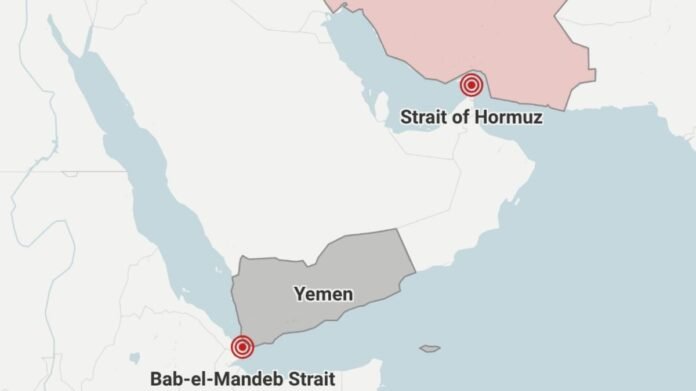

The escalating tensions between the Trump administration and Iran have raised concerns about the cost of living, particularly due to the potential closure of the crucial trade route, the Strait of Hormuz. This closure could have significant economic repercussions on western economies by keeping oil prices, including petrol, at high levels.
While negotiations for a peace deal are scheduled to resume in Islamabad, leaders from both sides are displaying strength. Iran holds control over the Hormuz strait and the Bab el-Mandeb Strait, the latter being an essential alternative route currently in use while the former remains closed. The Bab el-Mandeb Strait, located off the coast of Yemen, is under the influence of Iran-aligned Houthi rebels who have threatened to block the passage.
Reports indicate that Iran still possesses a substantial amount of ballistic missiles and drones, with the Bab el-Mandeb Strait serving as a vital shipping route for global trade, especially for oil and fuel transportation between the Gulf, Europe, and Asia. Yemeni officials have expressed readiness to close the strait if needed, which could have severe implications for the global economy, particularly impacting major oil exporters.
Experts have warned that a closure similar to the one in the Strait of Hormuz could heavily impact the global economy by restricting the movement of various commodities through key chokepoints in the region. Noam Raydan, a senior fellow at The Washington Institute for Near East Policy, emphasized that such an event would significantly affect regional countries like Saudi Arabia that heavily rely on these shipping lanes for oil exports to Asia.
At Reach and among our partners, we collect data to enhance site experience, analyze usage, and display personalized advertising. You can manage your data preferences through the provided options. By using our website and services, you agree to our use of cookies and acknowledge our Privacy Notice and Terms and Conditions.