
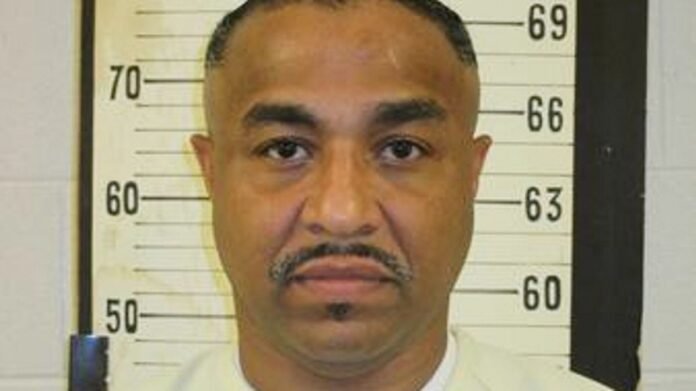

Tennessee authorities halted the planned execution of Tony Carruthers, a convicted murderer, due to difficulties in establishing a suitable vein for the lethal injection. Carruthers, found guilty of kidnapping and killing three individuals in 1994, faced the setback after attempts to set up an intravenous line failed for over an hour. Governor Bill Lee subsequently announced a postponement of the execution for at least a year.
According to a statement from the Tennessee Department of Corrections, medical staff successfully established a primary IV line but struggled to locate a suitable vein for a backup line as mandated by the state’s execution protocol. Despite efforts to insert a central line, the execution had to be called off.
During the ordeal, Carruthers, represented by Maria DeLiberato from the American Civil Liberties Union, displayed signs of discomfort while medical personnel attempted to find a vein. Media witnesses were prevented from observing the IV insertion due to a state rule, causing frustration among onlookers.
The failed execution of Carruthers adds to a series of similar incidents, as six other prisoners in different states have had their executions delayed due to IV-related issues. The Death Penalty Information Center highlighted concerns regarding the execution process and the qualifications of those involved in carrying out the sentences.
Carruthers, who was implicated in the 1994 deaths of Marcellos Anderson, Delois Anderson, and Frederick Tucker, had no physical evidence linking him to the crimes. Despite his mental health challenges and legal representation issues, his execution remains a topic of debate and legal contention.
In a broader context, the number of executions in the U.S. has seen a notable increase, with Florida notably driving up the overall count. The surge in executions has prompted discussions on the efficiency and ethical considerations surrounding the death penalty practice in the country.