
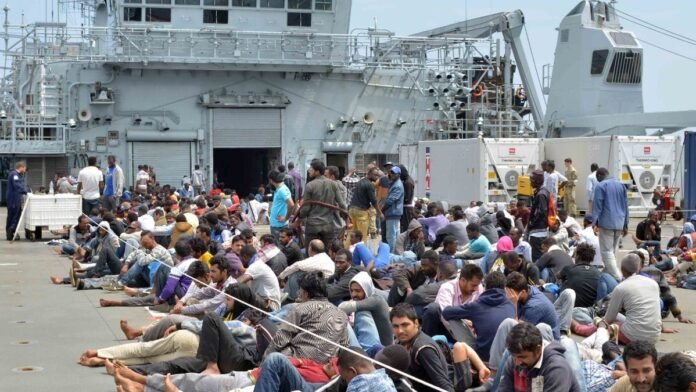

Reform leader Nigel Farage’s proposal to have the Royal Navy intercept small boats has faced criticism for being highly challenging, logistically intricate, and seen as a misuse of essential military resources. The idea, largely ridiculed, may resonate with far-right ideologies aiming to address perceived threats, but experts point out the significant risks and impracticality involved. Maritime regulations mandate vessels to prioritize saving lives at sea, which the Daily Mirror observed firsthand, highlighting the immense difficulties of such an operation given unpredictable conditions and limited resources.
The Royal Navy currently faces a shortage of ships and inadequate resources to address real threats confronting the UK. A source from Western intelligence expressed concerns over labeling the migrant situation as a military threat, emphasizing the complexities of sea operations and the impracticality of deploying troops for such purposes. The current global geopolitical tensions, including conflicts in Ukraine and the Middle East, demand attention and resources, making the proposed Navy intervention even more questionable.
In a previous operation in 2015, the Mirror team participated in a multinational effort to rescue migrants on small boats journeying from Libya to Italy. The rescue mission, which saved 1,200 individuals in a few hours, showcased the meticulous and time-consuming process involved in preventing any casualties. The operation required careful coordination as Royal Marines and sailors on HMS Bulwark approached the distressed boats cautiously to ensure a safe rescue.
The intricacies of high-seas rescues underscore the challenges of saving lives in perilous conditions, emphasizing the need for humane and well-thought-out responses. The legal and ethical implications of redirecting rescued individuals to other countries pose additional complications for any government. With ongoing global crises and the Royal Navy’s commitments to various strategic operations, diverting resources to patrol the English Channel could strain an already overstretched military force.
Former Royal Navy Commander Tom Sharpe suggested utilizing civilian ferries as a more practical alternative to military interventions. However, the symbolic and political implications of military involvement, especially in dealing with vulnerable populations, raise ethical concerns. As the Royal Navy grapples with complex maritime security challenges, prioritizing strategic deployments aligned with international laws and humanitarian values remains crucial.