
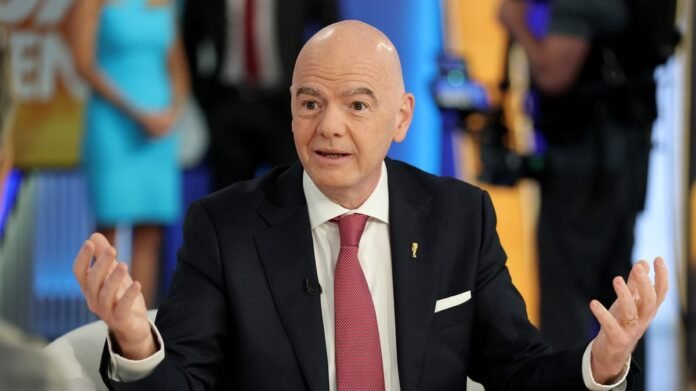

FIFA faced mounting pressure, with widespread calls for President Gianni Infantino to step down following the controversial decision to rescind a red card suspension for a US player. The player, Folarin Balogun, should have been banned for the next match against Belgium after being sent off in the previous game. However, after discussions with Donald Trump and Andrew Giuliani, the suspension was postponed, sparking outrage within the football community.
The move by FIFA prompted UEFA to accuse the organization of compromising the World Cup’s integrity. Balogun’s suspension was lifted under FIFA’s disciplinary rules, citing a probationary period for one year. This decision allowed the player to participate in the crucial match against Belgium, despite receiving a red card earlier. The rare reversal of a red card suspension raised eyebrows, as only one other player in World Cup history had evaded a ban under similar circumstances.
President Infantino defended the decision, emphasizing the autonomy of FIFA’s judicial bodies in handling such matters. The Belgian Football Association’s appeal was dismissed as inadmissible by FIFA’s Appeal Committee, stating that the association lacked standing to challenge the decision. Meanwhile, various football figures and fans criticized the decision, questioning the influence of political interventions on the sport’s disciplinary processes.
The controversy surrounding the Balogun case has reignited debates on FIFA’s governance and the role of political influence in football. Critics, including former FIFA officials and prominent football personalities, condemned the decision, calling for greater adherence to the sport’s regulations. The incident has sparked widespread discontent among fans and stakeholders, raising concerns about the transparency and fairness of FIFA’s decision-making processes.