
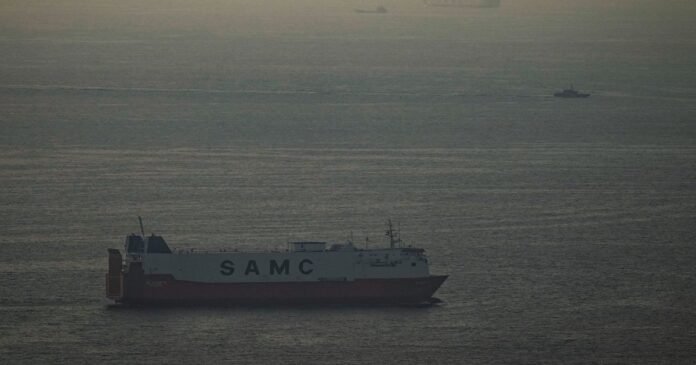

Iran is planning to implement toll charges for ships navigating through the Strait of Hormuz. The decision includes a ban on ‘Americans and the Zionist regime’ from using the strategic waterway.
The announcement followed shortly after the White House reiterated ongoing discussions with Tehran. Iranian officials disclosed the toll imposition plan via a Telegram post later shared by the official Fars news agency. The plan, termed the “Strait of Hormuz management plan,” was unveiled by a member of the National Security Commission.
Under this plan, vessels passing through the Iranian-controlled strait will be required to pay toll fees. The move comes in the wake of multiple ship attacks in the Strait of Hormuz following US-Israeli military actions against Iran.
Meanwhile, despite Iranian officials’ claims that talks with the US were not active, White House Press Secretary Karoline Leavitt stated that discussions were progressing positively. She characterized public Iranian statements as posturing, highlighting more constructive private dialogues.
Leavitt outlined the administration’s four primary objectives in the conflict, emphasizing the destruction of the Iranian Navy, ballistic missiles, defense infrastructure, and preventing Iran from acquiring nuclear capabilities.
Iran’s Foreign Ministry confirmed receiving a 15-point proposal from the Trump administration but emphasized the absence of direct negotiations with Washington. Iranian parliament speaker Mohammad Bagher Qalibaf dismissed talks in Pakistan as a pretext for increasing US military presence in the region.
Amid escalating tensions, Iran warned of severe consequences if US forces intrude on its territory. The US has previously conducted airstrikes targeting military sites on Kharg, prompting Iran to threaten a ground invasion of Gulf Arab nations and mining activities in the Persian Gulf.
The strategic importance of the Strait of Hormuz in potential military scenarios has raised concerns among experts, considering the challenges of securing the region against possible threats from both land and sea.