
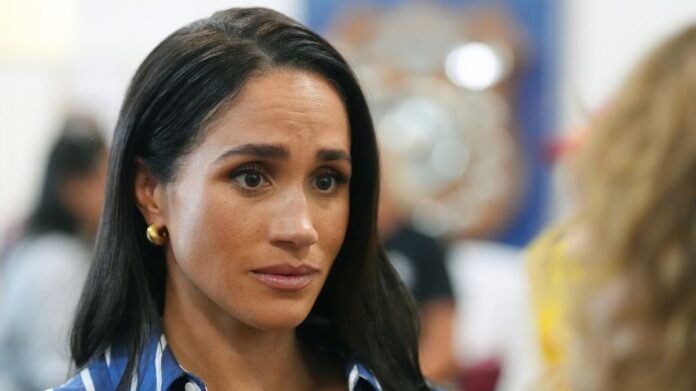

Meghan Markle faced criticism for her request to be called “Meg” during her recent tour of Australia. Some have labeled this move as a contrived effort to appear relatable on what has been dubbed a “faux royal trip.” The Duchess of Sussex, 44, and her husband, Prince Harry, 41, engaged in various activities in Melbourne, Canberra, and Sydney, including visits to charity organizations like the Royal Children’s Hospital and McAuley Community Services for Women, a shelter aiding homeless and domestic violence-affected women.
However, the decision for attendees and staff to address Meghan as “Meg” at these events received negative feedback. Critics deemed it as a strategic attempt to project approachability, conflicting with her perceived high standards and millionaire status. This move was seen as a calculated rebrand rather than genuine warmth.
A source familiar with public sentiments mentioned, “Encouraging people to essentially ‘Call me Meg’ is perceived as a scripted effort to create a more approachable image, but it clashes with her well-known diva reputation. Some view it as a manufactured attempt at relatability rather than authentic connection.”
While visiting the McAuley Community Services, Meghan Markle donned a striped apron and served food to residents, garnering praise for her interaction. A resident complimented her appearance, to which Markle warmly responded. The shelter staff appreciated her presence, shedding light on homelessness and family violence issues.
Jocelyn Bignold, CEO of McAuley, expressed gratitude for the attention brought to their cause by Meghan’s visit. The residents were thrilled and slightly nervous about meeting her, showing mixed emotions.
During the hospital visit, Prince Harry engaged with young patients, offering encouragement and well wishes. Patients recalled the couple’s supportive words, describing Harry and Meghan as sources of inspiration and bravery.
At Reach and its affiliated entities, cookies and device identifiers are used to enhance site experience, analyze usage patterns, and display personalized ads. Users can opt out of data sharing by clicking the appropriate button on the webpage. By using the website and services, users agree to the cookie usage and data practices outlined in the Privacy Notice and Terms and Conditions.