

The renowned Met Gala, once hailed as the pinnacle of fashion events, is now facing scrutiny about its relevance. Traditionally dubbed ‘Fashion’s Oscars’, the gala typically draws A-list celebrities showcasing elaborate and stunning attire in support of charity. However, this year, the event has sparked controversy for all the wrong reasons.
Critics and fans alike have deemed the Met Gala as “lifeless” and “deteriorating.” Instead of lauding the clothing and the creative minds behind them, or the star-studded attendees and their skilled stylists, many are questioning whether the gala has deviated from its charitable roots to become a spectacle of opulence that feels out of touch with the world at large.
This shift in perception can be attributed to the protests, high-profile absences, and lackluster ensembles witnessed at the 2026 Met Gala. The noticeable decline in the event’s allure has raised concerns about its future…
This year, the guest list seemed to generate as much buzz as those who chose to skip the gala. One notable absentee was Timothee Chalamet, who opted for a Knicks game over the gala. Rather than facing criticism, fans commended his decision, viewing it as a relatable choice to forego the glitzy event in favor of basketball.
Social media echoed the sentiment, with many expressing admiration for Chalamet’s choice to skip the gala for a sporting event. The absence of other high-profile figures like Ariana Grande, Harry Styles, Olivia Rodrigo, and Demi Lovato further underscored the gala’s waning appeal.
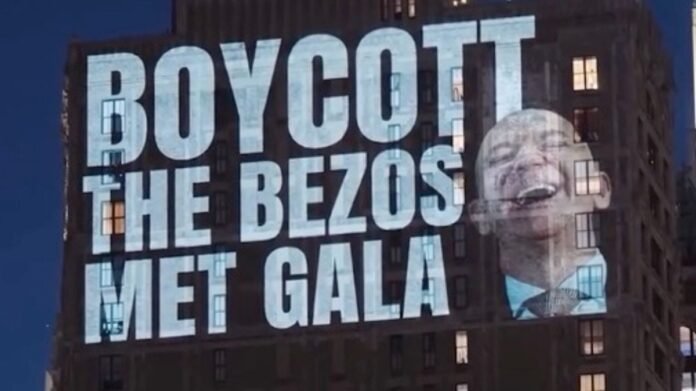
Additionally, the Met Gala faced backlash over its association with Jeff Bezos, whose sponsorship led to notable figures like Bella Hadid, Taraji P. Henson, and Lisa Ann Walter opting out of the event. The involvement of the Amazon magnate and his wife as lead sponsors and honorary co-chairs marked a departure from previous corporate sponsors, raising questions about the gala’s direction.
Critics argued that the gala’s pivot towards individual sponsorship diluted its essence as a platform for creativity and philanthropy. Lisa Ann Walter, in particular, criticized the gala for deviating from its core values in favor of spotlighting Bezos’ influence.
The gala’s connection to Bezos’ business dealings prompted widespread protests in New York City, with posters calling for a boycott of the event over concerns of worker exploitation and ties to immigration enforcement. Organizations like the Service Employees International Union and the Amazon Labour Union staged demonstrations to highlight ethical concerns surrounding the gala’s sponsor.
While the Met Gala has faced criticism and controversies in the past, this year’s event has reignited debates about its purpose and relevance. From high-profile no-shows to sponsorship disputes, the gala’s future hangs in the balance as it navigates a changing landscape of public perception and social responsibility.