
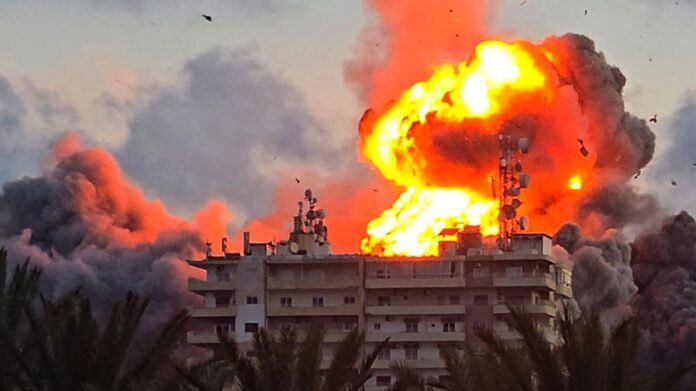

Israeli forces have advanced further into Lebanon in the most recent escalation in over two decades, following Prime Minister Benjamin Netanyahu’s orders for strikes on Beirut, disrupting a fragile ceasefire. The situation has raised concerns about a potential humanitarian crisis, exacerbated by renewed US missile attacks on Iranian military targets and Tehran’s aggression towards neighboring states. The breakdown of Beirut’s tenuous ceasefire has cast doubt on the prospects for peace in the volatile Middle East, with peace negotiations hinging on an end to conflict in Lebanon, as emphasized by Tehran.
Forecasts indicate imminent large-scale bombing operations targeting Hezbollah strongholds in south Beirut, prompting thousands of refugees to flee, worsening an already dire situation. The primary target of the Israeli offensive is believed to be the Beirut suburb of Daraya, one of three key Hezbollah enclaves in Lebanon. Over 1.2 million Lebanese citizens are now displaced due to the conflict between Hezbollah and Israeli forces, with no signs of a resolution in sight.
In response, Hezbollah has launched rocket attacks on northern Israel, specifically targeting the city of Haifa. Israeli airstrikes in southern Lebanon overnight resulted in casualties, including a Syrian individual near Nabatiyeh. The Israeli military intercepted projectiles launched from Lebanon towards Israeli territory, while Iran’s foreign minister underscored the necessity of a ceasefire in Lebanon for any potential peace agreement.
The ongoing conflicts in both regions are intertwined, as Iran insists on linking negotiations to resolve the US-Iran standoff over Tehran’s nuclear aspirations. Israeli troops have seized the historically significant Crusader Beaufort Castle in southern Lebanon, suggesting a potential expansion of Israeli territorial control. Amid allegations of a harsh military approach by Israel in southern Lebanon, President Donald Trump dismissed criticism, expressing optimism about reaching a favorable deal with Iran and assuring that the situation would eventually be resolved positively.
Recent air attacks between the US and Iran have reignited tensions, with Kuwait also facing threats from Iran’s Revolutionary Guard Corps. The escalation prompted air defense responses in Kuwait, with reported incidents of Iranian actions against a US military facility within the country. Prior efforts to reach a preliminary agreement between the US and Iran, aimed at easing hostilities and addressing key issues like reopening the Strait of Hormuz and lifting US sanctions, have encountered setbacks.
While Tehran advocates for Hezbollah’s inclusion in any long-term peace agreement, Israel maintains its stance on excluding the militant group from negotiations. The complex dynamics between the involved parties underscore the challenges in achieving lasting peace and stability in the region.