
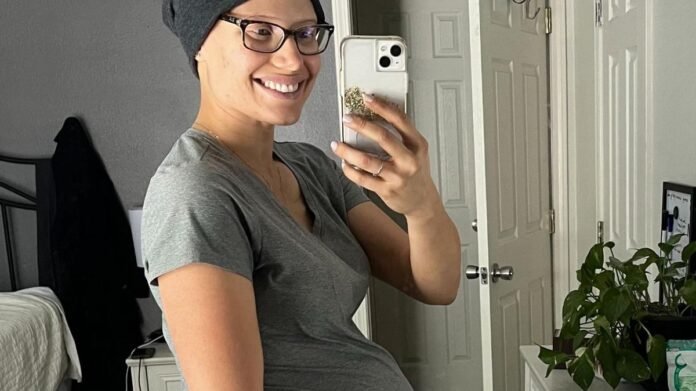

A mother, initially mistaking her symptoms for pregnancy-related issues or an infection, received a shocking diagnosis of one of the most lethal types of cancer while carrying her daughter. Joanna Walters, 33, expressed her joy upon discovering she was pregnant with her fourth child, particularly as she and her husband already had three sons and were thrilled to finally be expecting a daughter.
As she eagerly anticipated the arrival of her baby girl, Joanna unknowingly developed inflammatory breast cancer (IBC), a rare and aggressive form of the disease that can often be mistaken for an infection. Initially attributing her symptoms to pregnancy-related changes, Joanna, hailing from Florida, shared her experience to caution other mothers.
Noting a small nodule in her breast, Joanna believed it was a normal pregnancy-related occurrence. However, as the symptoms progressed, including breast swelling, asymmetry, tenderness turning into sharp pain, and the appearance of a nodule with red rash and textured skin, she became alarmed. Concern peaked when her nipple inverted, resembling mastitis but with distinct features.
Upon expressing her worries to her midwife at the 20-week mark, Joanna’s condition had already advanced beyond her breast. Following a prompt referral, a mammogram revealed multiple tumors in her left breast and lymph nodes, leading to a swift diagnosis the next day. Overwhelmed by the rapid turn of events, Joanna faced the harsh reality of battling a rare and aggressive cancer, despite her prior efforts to maintain a healthy lifestyle.
Commencing treatment a week after diagnosis, Joanna underwent a series of chemotherapy sessions, completing the regimen at 35 weeks of pregnancy. Shortly after finishing chemotherapy, she gave birth to her daughter, Naomi, in October 2022. Subsequent tests unveiled a mixed outcome, indicating the absence of measurable tumors in some areas but the presence of active cancer in lymph nodes and surrounding tissues.
Following surgery and rigorous radiation treatment, Joanna embarked on targeted therapy to minimize the risk of recurrence. Encouragingly, subsequent tests showed no detectable cancer cells in her body, bringing immense relief and paving the way for a positive recovery trajectory.
Emphasizing the importance of awareness, Joanna highlighted the challenges of navigating treatment protocols for rare cancers and urged patients to advocate for themselves and seek second opinions to ensure optimal care. Her journey, marked by resilience and hope, serves as a testament to the power of determination and medical advancements in combating complex health challenges.