
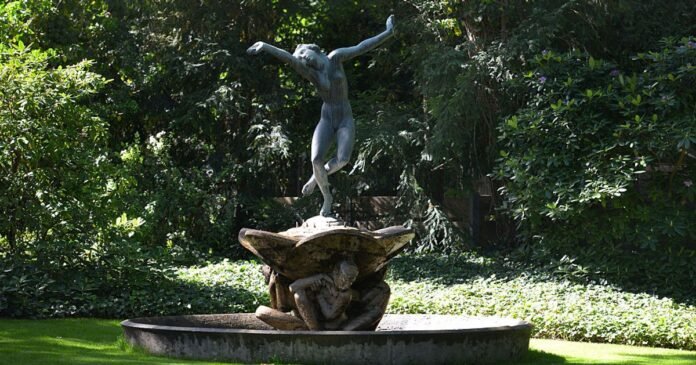

A valuable sculpture known as the ‘Dancing Girls Fountain’ that has been on display at a museum in Germany is being returned to the heirs of a Jewish man who perished in a concentration camp during the Nazi regime.
After a prolonged legal battle, the fountain, created by renowned German artist Georg Kolbe and valued at approximately £1.1 million, is now being handed back to the family of Heinrich Stahl, a prosperous insurance executive who met his demise at the notorious Theresienstadt concentration camp.
Originally situated in the garden of the Georg Kolbe Museum in Berlin for nearly five decades, the ‘Dancing Girls Fountain’ is now set to leave the museum grounds and be reunited with its rightful owners.
Katherine Reinhardt, the museum director, described the fountain as a ‘Nazi-persecution-related loss’ and acknowledged the historical injustice suffered by Stahl. She emphasized the museum’s commitment to finding a fair and just resolution for all of Stahl’s descendants and expressed openness to restitution.
The fountain, crafted in 1922 for Stahl, an esteemed art collector and former leader of Berlin’s Jewish community, adorned the grounds of his luxurious villa in the Dahlem district. However, tragic circumstances unfolded in 1941 when Stahl was forced to sell his property, including the fountain, at a fraction of its actual value under oppressive Nazi laws.
Following Stahl’s deportation to Theresienstadt, where he perished, the fountain disappeared post-war but resurfaced in the late 1970s at the Kolbe Museum. Decades later, the museum’s agreement with Stahl’s grandson, which allowed them to retain the sculpture, was deemed invalid, leading to the rightful heirs reclaiming ownership.
The return of the ‘Dancing Girls Fountain’ signifies a step towards rectifying the injustices suffered by Jewish families during the Holocaust, where millions were stripped of their possessions, including valuable artworks, by the Nazi regime across Europe.