
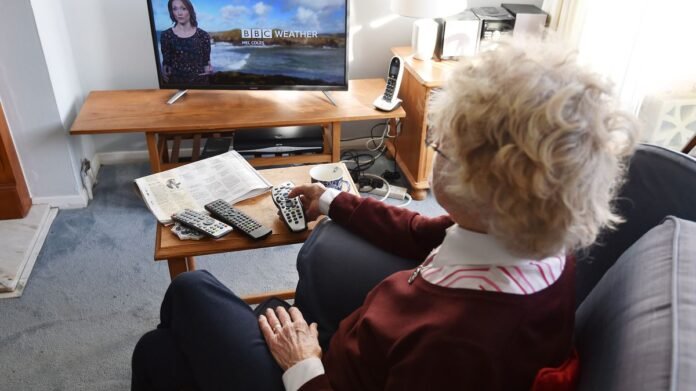

More than 150,000 individuals have called for the protection of free-to-air terrestrial television, with Andy Burnham urged to support the cause if he assumes the role of Prime Minister. There is mounting pressure on government officials to endorse a mixed future for TV and radio services, ensuring ongoing access to terrestrial TV in conjunction with internet streaming to prevent exclusion of any demographic.
The security of free-to-air terrestrial broadcast TV is in question as current licenses are set to expire in the early 2030s. A petition initiated by the pensioners’ group Silver Voices, advocating for the safeguarding of licenses, has garnered over 150,000 signatures. The petition is backed by the Digital Poverty Alliance and the Broadcast 2040+ Coalition.
Several Labour MPs, including Luke Akehurst, Polly Billington, Sarah Champion, Lorraine Beavers, and Jess Asato, are championing the campaign. In a letter to Andy Burnham, Silver Voices director Dennis Reed emphasized the significance of Freeview TV as a pivotal issue reflecting a party’s alignment with the public.
Advocates stress the importance of maintaining traditional TV services alongside emerging technologies like IPTV. They argue for a hybrid model that offers viewers flexibility in accessing television content while ensuring a reliable backup during emergencies or connectivity issues. Concerns have been raised regarding the potential impact on radio broadcasting and emergency service communications, which rely on similar infrastructure.
Labour MP Mr. Akehurst emphasized the public’s rejection of a hasty transition to IPTV-only services, asserting the importance of preserving terrestrial TV into the 2040s. Similarly, Labour MP Ms. Asato highlighted the integral role of terrestrial TV in daily life for many households, particularly for older individuals, families on limited budgets, and those in areas with poor connectivity.
A spokesperson from the DCMS affirmed the government’s commitment to ensuring inclusivity in TV viewing as online platforms gain prominence. The government aims to achieve nationwide gigabit-capable broadband coverage by 2032 and will engage in public consultations before making final decisions on TV distribution strategies.