
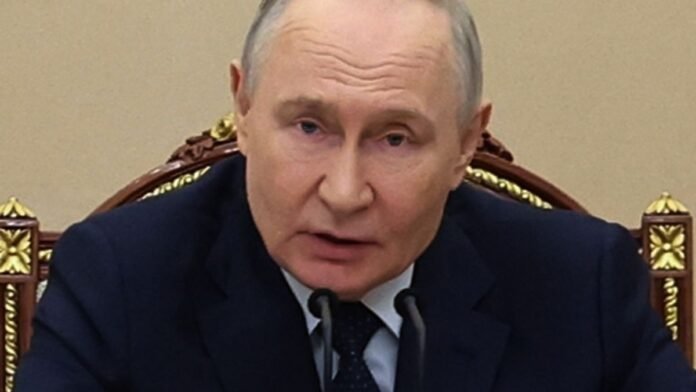

Vladimir Putin publicly acknowledged the challenges facing Russia’s economy, criticizing officials for their lack of a comprehensive plan. During a televised meeting, Putin highlighted a 1.8 percent contraction in Russia’s GDP over the initial months of the year and demanded detailed reports on the economic situation, expressing disappointment in the performance compared to expectations set by experts, analysts, and government projections.
Notable figures present at the meeting included Prime Minister Mikhail Mishustin, deputy chief of staff Maxim Oreshkin, central bank governor Elvira Nabiullina, and other high-ranking officials. The economic slowdown, attributed in part to high inflation stemming from conflicts, notably the war in Ukraine, has hindered Russia’s growth potential.
Despite a modest economic expansion in recent years, Russia has faced challenges such as a widening budget deficit, reduced oil tax revenues, and a labor shortage. This scarcity of labor is a new phenomenon for the country, impacting both the government and businesses. The persistent downturn in external conditions has led to inflation and maintained high interest rates, although recent adjustments by the central bank have slightly eased the situation.
The Russian economy’s troubles have also affected businesses, with high interest rates impacting company profits and leading to issues such as delayed payments and reduced work hours for employees. Concerns have been raised within Russia about the possibility of a banking crisis and nonpayment crisis, with officials expressing worries about the ongoing economic uncertainties.
Overall, the economic challenges faced by Russia, exacerbated by various factors including geopolitical conflicts and external pressures, have raised concerns about the country’s financial stability and future prospects.