
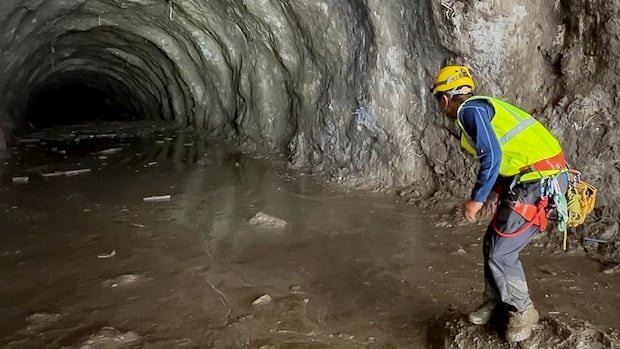

Rescue operations are in full swing to free a large number of workers suspected to be trapped in tunnels at hydropower facilities following devastating floods along the Nepal-China border. The death toll has risen to over 950, with more than 4,400 individuals reported missing in Nepal and China combined. A group representing power companies stated that around 900 workers are missing from 12 hydropower projects impacted by flash floods in Nepal.
Approximately 500 workers are believed to be stuck in tunnels, with varying opinions on their chances of survival. Despite the challenges, rescue efforts have been intensified, resulting in the recovery of four bodies from mud-filled tunnels. Australian tunnel rescue expert Arnold Dix expressed optimism about finding survivors and emphasized the significant loss of skilled workers for Nepal.
Efforts are concentrated on rescuing individuals trapped within the extensive tunnels designed to regulate water flow. An expert mentioned that some trapped workers have access to oxygen, highlighting the urgency of the situation due to the need for essential supplies. Specific projects like the Upper Trishuli-1 Hydropower Project have reported a high number of missing workers, with rescue teams striving to reach them.
In China, reconstruction efforts include restoring the road leading to the Gyirong Port border crossing. The focus has been on rebuilding infrastructure damaged by the floods to facilitate rescue and recovery operations. The official response from Chinese authorities has been emphasized in media coverage, with limited information available about the affected individuals on the Chinese side.
In addition to the rescue operations, efforts are being made to locate missing individuals, including foreigners. The Canadian government is actively involved in locating its citizens among the missing individuals. Families are anxiously awaiting news of their loved ones, with ongoing support and updates provided by officials to the affected families.
The catastrophic flash floods were triggered by a glacier collapse in the Himalayan region, leading to widespread destruction in Tibet and Nepal. Surveillance footage captured the chaos as people tried to escape the surging water, emphasizing the urgency of rescue efforts. The situation remains critical, with ongoing efforts to locate and assist those affected by the disaster.