

Alberta’s emerging Progressive Tory Party has officially selected its inaugural candidate and aims to field a contender in the upcoming Calgary-Shaw byelection. Spearheaded by Airdrie-Cochrane MLA Peter Guthrie, the provincial party rebranded last year following Guthrie’s revival of the dormant Alberta Party. Formerly a UCP MLA and cabinet minister, Guthrie now represents the Progressive Tory faction in Alberta’s legislative assembly.
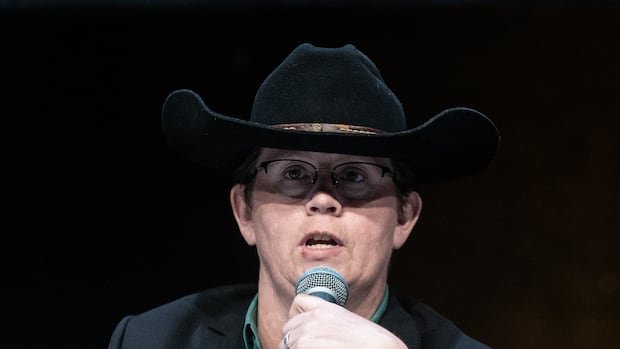
Bonnie Critchley, a retired member of the Canadian Armed Forces who contested against Pierre Poilievre in the August 2025 federal byelection in Battle River-Crowfoot, has been designated as the Progressive Tory candidate in the provincial Camrose riding. Despite Poilievre securing 81% of the vote in the recent federal byelection, Critchley clinched second place with 9.8% of the total ballots.
In an interview with CBC News, Critchley revealed her initial reluctance to re-enter the political arena after her previous bid primarily aimed at Poilievre’s candidacy in an unfamiliar riding. However, spurred by the UCP government’s swift legislative actions during the teachers’ strike last fall using the notwithstanding clause, Critchley felt compelled to act upon public urging. After consultations with Guthrie, she reluctantly decided to contest in the 2027 provincial election to address the perceived erosion of Albertans’ rights.
Critchley emphasized the urgency of safeguarding Canadians’ rights, prompting her commitment to a Progressive Tory government prioritizing accountability measures to combat corruption. The nomination of Critchley marks a significant milestone for the nascent party established by Guthrie, who had faced expulsion from the UCP caucus for advocating a public inquiry into procurement practices at Alberta Health Services.
Guthrie, since January, has been diligently building the party’s infrastructure by establishing constituency associations, with plans to nominate additional candidates in the ensuing weeks. The party aims to field a comprehensive roster of candidates in the fall 2027 provincial election and intends to participate in the impending Calgary-Shaw byelection following the resignation of former UCP MLA Rebecca Schulz in May.
While UCP’s Director of Communications, Dave Prisco, remains confident in the party’s appeal to voters, Guthrie and Critchley dismiss concerns of potential vote-splitting benefiting the NDP. Guthrie argues that the UCP’s inception aimed to prevent right-wing vote fragmentation, highlighting the party’s shift towards populist ideologies post-formation.
The Progressive Tory Party’s stance on preserving Alberta’s unity aligns with Critchley’s belief that separatist sentiments remain a minority in the Camrose riding. Despite apprehensions of vote dilution, former NDP Minister Shannon Phillips opines that the new party’s centrism may pose a challenge to the NDP’s electoral prospects.
Critchley and Guthrie remain resolute in their pursuit of effecting change in Alberta’s political landscape, emphasizing the need for a distinct party identity and clear messaging to resonate with voters. Amid skepticism surrounding the party’s impact, Guthrie maintains optimism, noting the dynamic nature of politics and the potential for rapid shifts in public sentiment.
Critchley’s conversations with disillusioned UCP voters underscore a growing sentiment for representation over fear-based voting practices, underscoring her commitment to repositioning the political discourse towards substantive issues rather than divisive rhetoric.