
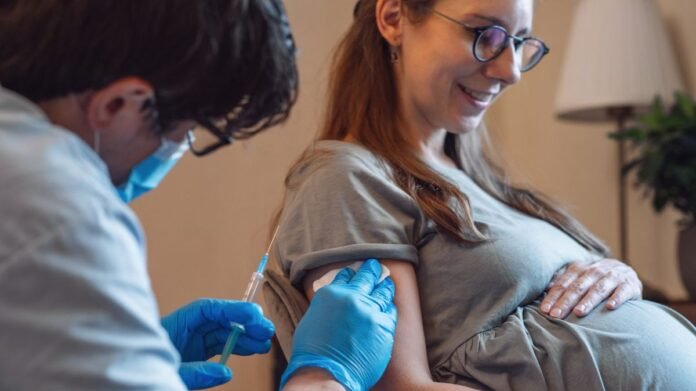

A vaccine administered during pregnancy has resulted in an 80% decrease in hospital admissions for infants suffering from respiratory syncytial virus (RSV) chest infections, according to health authorities.
Over 20,000 babies were expected to require hospitalization after contracting RSV, a condition that primarily impacts infants in their early months, causing breathing difficulties and feeding challenges.
Pregnant women have been receiving the vaccine starting at 28 weeks to lower the incidence of RSV among newborns since 2024. The UK Health Security Agency (UKHSA) reported that the vaccine provided significant protection to vulnerable babies.
RSV is a major reason for infant hospitalizations before their first birthday, with babies under six months, premature infants, adults over 75, and individuals with weakened immune systems being most susceptible.
Nearly all children contract RSV before age 2, with severe cases potentially leading to respiratory issues necessitating hospital care.
Dr. Conall Watson, leading the RSV program at UKHSA, expressed concern, stating, “This is very, very frightening as a parent, frightening with good reason.” Research indicated that the vaccine offers around 85% protection when administered at least four weeks before birth.
The study suggested that even if the vaccine is given later, some protection remains. Dr. Watson advised, “If there’s a longer interval between vaccination and birth, the protection improves.”
The research, involving 300,000 babies born in England from September 2024 to March of the following year, found that a vast majority of hospitalized infants had not received the RSV vaccine. One mother shared her son’s RSV-related ordeal to raise awareness about the importance of vaccination.
Dr. Watson emphasized the vaccine’s potential in safeguarding babies during winter and urged pregnant women to consider getting vaccinated early in their third trimester.
Statistics reveal that approximately 64% of pregnant women in England receive the vaccine, with a lower rate of 53% in London.