


On Wednesday, Russian drones targeted a passenger bus and a train in southern Ukraine, resulting in the deaths of five individuals, according to Ukrainian officials. This incident comes as Moscow continues its assault on transport infrastructure and logistics.
A regional governor shared a photograph on Telegram depicting a white vehicle with shattered windows and what seemed to be a trail of blood down its side. The authenticity of the image has not been confirmed by Reuters.
Ukrainian President Volodymyr Zelenskyy condemned the attack on social media, stating, “There is no military logic to this, just another act of brutality.” He urged the United States and European nations to intensify sanctions against Russia.
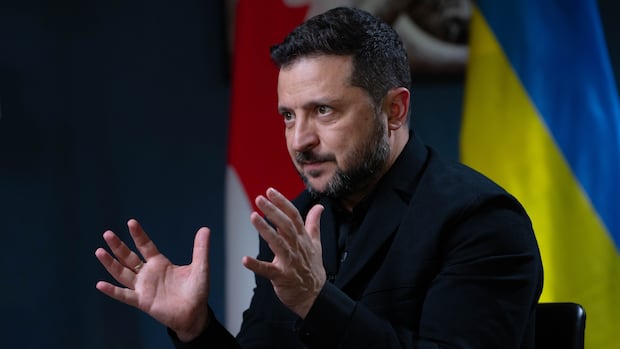
Ukrainian President Volodymyr Zelenskyy addresses the Moldova drone threat, sharing with CBC News chief correspondent Adrienne Arsenault that he is not taken aback by Russia’s perilous strategies. In this exclusive Canadian interview, Zelenskyy dismisses the U.S. notion of a ‘win-win’ solution and discusses increasing internal calls for a wartime election.
In recent months, both Russia and Ukraine have engaged in intensified strikes targeting logistical and economic assets to undermine each other’s military operations and lower morale.
Since Russia’s full-scale invasion in 2022, Ukraine’s airspace has been closed, making buses and trains crucial for transporting civilians and supporting businesses.
The drone strike on the passenger bus near the frontline city of Nikopol resulted in the deaths of four men and one woman early Wednesday, according to police reports.
Additionally, seven individuals sustained injuries from the attack, as stated by Oleksandr Hanzha, the governor of the Dnipropetrovsk region, who also shared the photo.
There was no immediate response from Russia regarding the incident. Both nations claim not to intentionally target civilians amidst the conflict that was initiated by Russia’s large-scale invasion of Ukraine.
Strike on Passenger Train
A passenger train in the Mykolaiv region of southern Ukraine was also hit by a Russian drone, as reported by the acting regional governor.
Heorhii Reshetilov informed via Telegram that all 168 passengers and crew members were safely evacuated without any injuries. He noted that the train was struck two additional times following the initial attack.
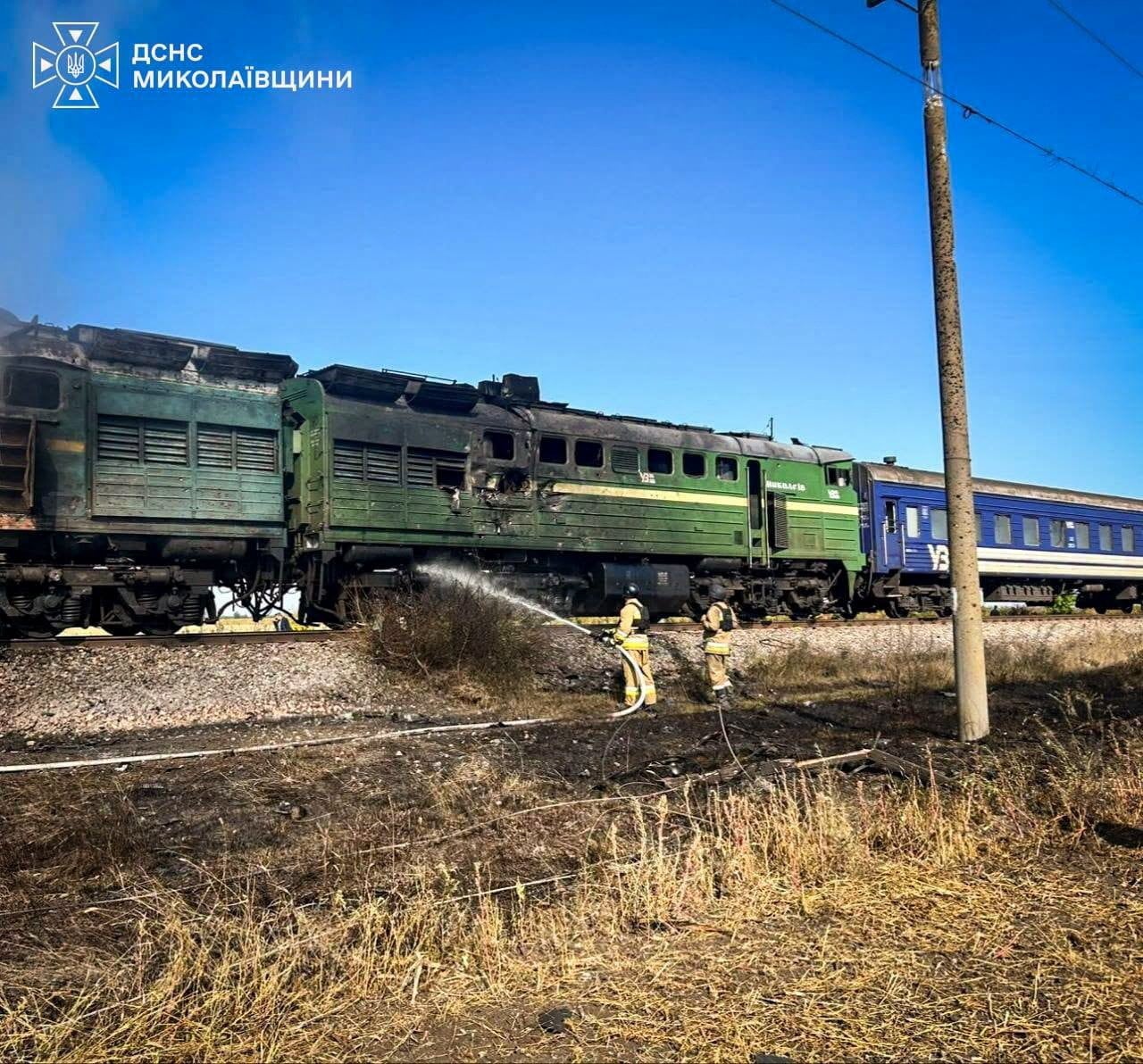
Emergency responders at the scene of a passenger train locomotive that was targeted by a Russian drone strike in the Mykolaiv region of Ukraine on Wednesday. (State Emergency Service of Ukraine/Reuters)
Zelenskyy also mentioned that alongside the Mykolaiv train incident, a locomotive in Kovel, located near the Polish border, was similarly hit.
These events follow recent similar assaults, including one on a train close to Ukraine’s border with NATO-member Poland on Sunday, shortly after European diplomats and officials had utilized that route.
According to the state rail operator, Russia has ramped up its attacks on Ukrainian railways, damaging 120 passenger cars, 304 locomotives, and 43 railway stations this year alone.
-
EU condemns Russian strike at Ukrainian train station where global leaders had assembled
-
Listen
Destruction of millions of Ukrainian books by Russian attacks constitutes a ‘cultural genocide’
-
Fatal Russian assaults on Ukraine follow Putin’s caution to European leaders
The company reported that since the beginning of the year, Russia has targeted a total of 1,700 railway facilities, an increase from 1,206 in 2025 and 842 in 2024.
Andrii Sybiha, Ukraine’s Foreign Minister, noted on X that “Russian forces target passenger trains, locomotives, stations, and railway routes, fully aware of their critical importance for civilians, evacuations, and Ukraine’s economy.”
He emphasized, “This is not incidental damage. It is a deliberate campaign against civilians and an effort to incapacitate everyday life.”
Upcoming Election as a Measure of Support for War: Putin
On Wednesday, Russian President Vladimir Putin characterized the upcoming parliamentary election as an indicator of support for Russia’s military actions in Ukraine, encouraging citizens to cast their votes.
Russia is set to hold a three-day parliamentary election starting Friday to fill the 450 seats in its lower house, the State Duma, known for its consistent endorsement of Kremlin policies.
This marks the first parliamentary election since Russia initiated its full-scale military campaign in Ukraine in February 2022, occurring at a time when surveys indicate rising unease among some Russians regarding the conflict’s personal impact, amid economic difficulties and the exclusion of most anti-war candidates from the ballot.
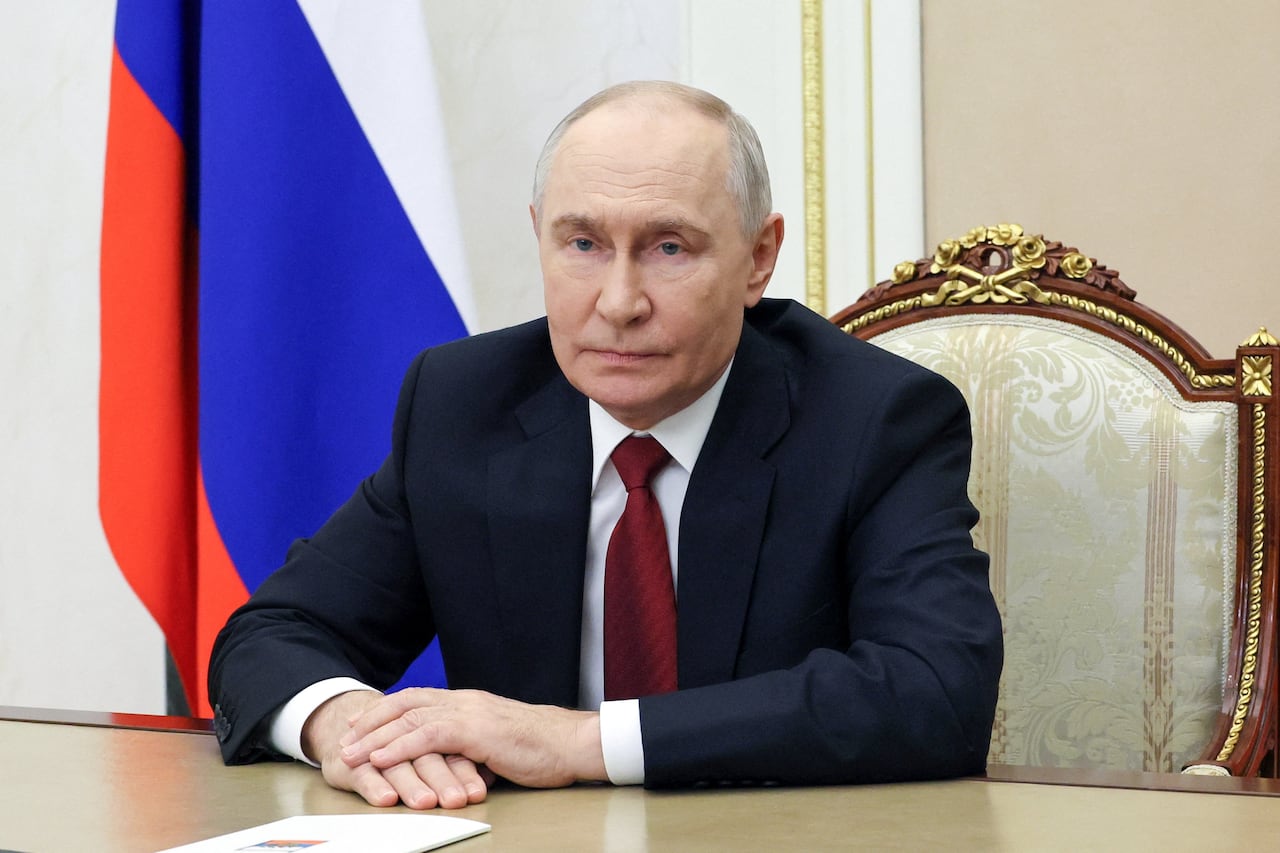
Russian President Vladimir Putin addresses the nation in Moscow ahead of the forthcoming parliamentary election, September 16, 2026. (Sputnik/Mikhail Metzel/Reuters)
The political landscape is tightly regulated, and the ruling United Russia party, which is supported by Putin, is widely anticipated to maintain its preeminence.
In a televised address before the election, Putin referred to the ongoing conflict in Ukraine and Russian-controlled territories, asserting that voting would contribute to securing Russia’s triumph and showcase national unity against external challenges.
Putin stated, “Your choice and your determination will once again show that millions back our soldiers, that we are a united nation connected by shared values, historical memories, and love for our homeland, and that no one will manage to divide or intimidate us, nor will they undermine our statehood and socio-political structure.”
He added that the election would act as a collective response to those aiming to weaken Russia, obstruct its advancement, and deprive it of its sovereignty and right to shape its future.