
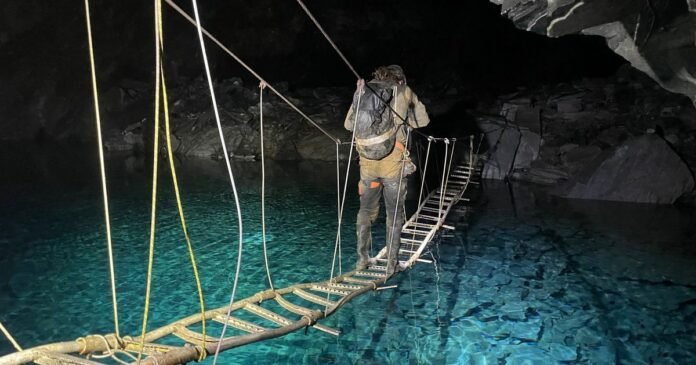

A spelunker was swiftly taken to the hospital from a treacherous underground area when a zip wire failed. Mountain rescuers sprang into action after the climber plummeted onto rocks in the well-known “snakes and ladders” cave. This cave, located in the Croesor-Rhosydd complex near Blaenau Ffestiniog, Gwynedd, features challenging sections like the “chamber of horrors” and a perilous “bridge of death” suspended over water.
Concerned colleagues raised the alarm upon exiting the cave, prompting a Coastguard rescue helicopter equipped with a stretcher to respond to the scene. The zip wire malfunctioned as the climber attempted to cross the lake.
Rescue teams emphasized the need for experienced climbers to navigate this demanding site, which is recognized as the most frequented underground location for rescues in North Wales. Adventurers exploring the interconnected quarries utilize ropes, suspension bridges, zip wires, and inflatable boats. It is advised for individuals taking on this challenge to leave their itinerary details with a third party in case of a rescue situation.
The North Wales Cave Rescue Organisation (NWCRO) and the South Snowdonia Search and Rescue Team were alerted to the incident and coordinated the rescue efforts. Following the airlifting of some team members, they regrouped and safely escorted the remaining members of the party to their vehicles in Tanygrisiau.
A spokesperson for NWCRO reported that the casualty managed to exit the cave independently but required assistance to progress further. Subsequently, the casualty was airlifted by helicopter to Ysbyty Gwynedd in Bangor for medical attention.
Although rescue incidents decreased last year, concerns have been raised about the potential for a tragic event. A local climber expressed apprehension, stating, “This route, in my opinion, is a disaster waiting to happen. I don’t advocate for access restrictions, but it’s only a matter of time before a recovery operation is needed.”
The Croesor slate mine, which commenced small-scale quarrying in 1846 and later reopened in 1895 after a closure, has a history tied to underground explosives storage post-World War II. The mine is linked to the adjacent Rhosydd quarry through a tunnel that remains accessible to cavers.