
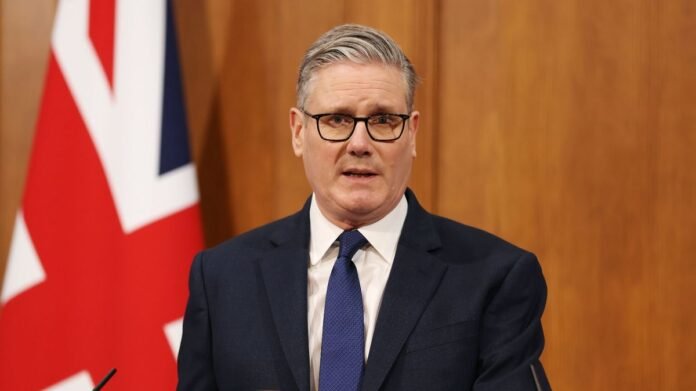

Keir Starmer is facing a significant electoral challenge as voters prepare to cast their ballots in the upcoming local elections in May. Recent polls are not painting a rosy picture for Starmer, but Prime Minister’s interactions with Donald Trump are providing a glimmer of hope.
Amidst the turmoil surrounding the US President, Starmer’s refusal to engage in the Iran conflict has garnered public approval and positioned him favorably. This contrasts with the struggles faced by Nigel Farage and Kemi Badenoch, giving Starmer an opportunity to showcase his independence from past political decisions.
The positive reception towards Starmer’s stance has lifted the spirits within the political circles, shifting the narrative from a defensive position to a more proactive approach. Additionally, the missteps of Farage’s party, particularly the fallout from insensitive remarks and close ties to Trump, have dented their public image.
Despite the optimistic outlook, projections indicate a challenging day for Labour on May 7, with potential significant seat losses. Experts predict gains for Reform party while anticipating a substantial decline for Labour.
The upcoming elections are being dubbed as one of the most critical and challenging by poll analysts and political figures. The uncertainty in voter allegiance adds another layer of complexity to the electoral landscape, emphasizing the need for strong messaging and leadership.
Although the outcome remains uncertain, Starmer’s handling of recent events has been praised, offering a glimmer of hope amidst the challenging political climate. However, if the results align with predictions, questions about Starmer’s future leadership may emerge, prompting discussions about potential challengers.
Labour remains optimistic, highlighting their commitment to addressing key issues like healthcare, cost of living, and national pride. The historical context of past election outcomes underscores the volatility of mid-term elections and their limited predictive value for future general elections.
As the election date approaches, the focus shifts towards engaging voters and providing solutions to socioeconomic challenges. The call for clarity and impactful policies resonates among Labour MPs, emphasizing the need for a strong narrative that addresses the concerns of the electorate.