
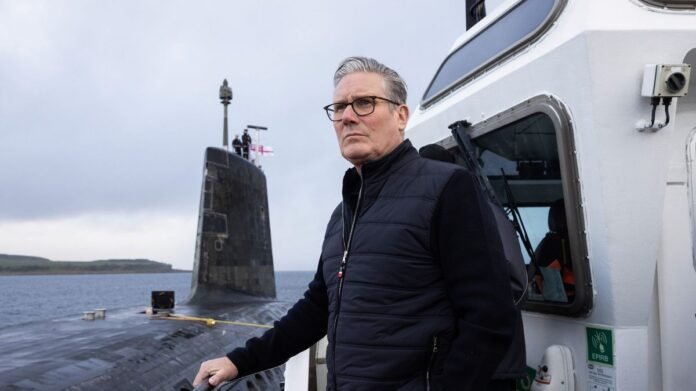

Keir Starmer emphasized the crucial role of Britain’s nuclear deterrent in safeguarding national defense, cautioning against overlooking the ongoing tensions with Russia amidst the Iran crisis. The Prime Minister granted exclusive access to accompany him on a visit to a nuclear-armed Vanguard-Class submarine returning from a lengthy 206-day mission off the coast of Scotland.
During his classified visit to welcome Royal Navy submariners on their return from a prolonged patrol, Starmer highlighted the significance of Britain’s nuclear arsenal as a deterrent to Vladimir Putin and other potential threats. He praised the dedication of the crew and acknowledged the paramount importance of the submarines in ensuring national security, emphasizing their role in bolstering the safety of both the UK and NATO.
Notably, this marked only the second occasion a Prime Minister had visited the Vanguard submarines responsible for Britain’s nuclear deterrence, with the continuous presence of one vessel armed with Trident missiles forming a critical component of the country’s defense strategy. Starmer stressed the weighty responsibility tied to the nuclear capability, particularly referencing the protocol of handwritten letters of last resort issued by each Prime Minister to submarine commanders in the event of a catastrophic attack on the British government.
Amid rising concerns over Russian activities, including suspected espionage operations near undersea infrastructure in the North Atlantic, and recent provocative incidents involving Russian vessels near UK waters, Starmer underscored the dual threats faced by the UK from conflicts in Iran and Ukraine, urging vigilance against potential Russian aggression. He reaffirmed the effectiveness of Britain’s nuclear capabilities in deterring Putin and ensuring long-term national security.
Addressing criticisms regarding defense spending and readiness, Starmer defended the government’s financial commitments to bolstering the armed forces and rectifying previous cuts, acknowledging the need for further investment in defense capabilities to counter evolving threats. He advocated for enhanced collaboration within NATO and emphasized the importance of a stronger European contribution to collective defense efforts.
In light of the ongoing Iran crisis, Starmer reiterated his stance on safeguarding British national interests and avoiding entanglement in conflicts, affirming a commitment to defensive actions while steering clear of direct involvement in hostilities or blockades.