
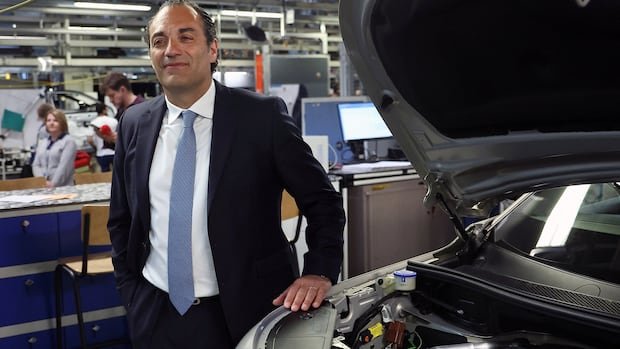

Stellantis CEO Antonio Filosa has emphasized that the company’s significant strategic shift will require time to yield results following the automaker’s second-quarter earnings report that fell short of expectations, leading to a drop in its stock value.
In a bid to recover lost market share in the U.S. and introduce 60 new models by 2030, Stellantis outlined a $70 billion turnaround plan earlier this year. Filosa highlighted three key objectives during a recent call with analysts: expanding market presence, cutting production costs, and enhancing product quality. Progress in these areas has been gradual but steady.
Filosa acknowledged the challenges faced, stating, “We need time to address these issues, they cannot be resolved overnight.” He reassured reporters that the company is on track and executing its plans efficiently.
Stellantis experienced a 6% sales increase in North America, driven by a surge in sales of high-margin Ram pickup trucks and Jeep models, which Filosa has prioritized to boost market share in the U.S. However, revenue in Europe remained unchanged as Stellantis had to reduce prices to fend off rising competition from Chinese automakers.
To counter the competition from Chinese rivals like BYD and Chery, Stellantis plans to leverage its partnership with Chinese joint-venture partner Leapmotor, whose sales in Europe surged nearly sixfold in the first half of 2026. Filosa also revealed plans to develop new vehicle platforms for the European market to match Chinese competitiveness standards.
Despite a significant increase in adjusted earnings before interest and tax to $884 million in the second quarter, Stellantis fell short of analysts’ expectations. The company’s Milan-listed shares closed down by 4.31%. Analysts pointed out that the adjusted operating income margin remained low at 1.8%, citing reasons such as price reductions in Europe, higher administrative and R&D expenses, unfavorable currency fluctuations, and tariffs.
Since assuming the CEO position last year, Filosa has been focused on revitalizing volumes and reclaiming lost market share, aiming for a broader turnaround based on the recovery of the core business. Stellantis has adjusted its electrification goals and witnessed a decline in its stock value since Filosa took the helm.
Stellantis’ second-quarter revenue surged by 13% year-on-year, with a notable 32% increase in North America driven by popular models like the Jeep Grand Wagoneer and Ram 1500 truck. However, concerns were raised about the need for restructuring before launching new higher-margin models.
The company maintained its full-year outlook, expecting mid-single-digit revenue growth, a low-single-digit adjusted operating income margin, and positive industrial free cash flow projected for the next year. Stellantis also forecasted U.S. tariff costs ranging from $1.15 billion to $1.38 billion for the year.