
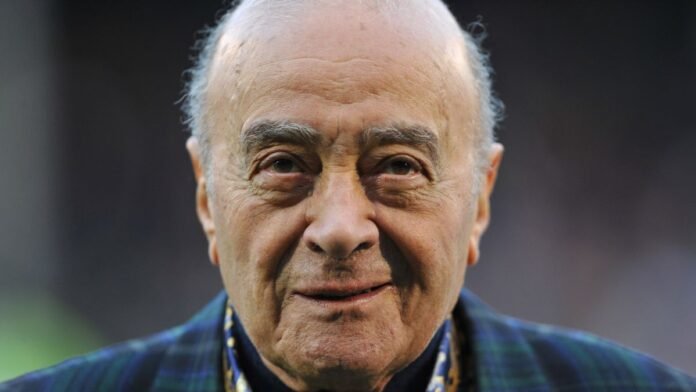

At least five individuals who were victims of sexual abuse by Mohamed Al-Fayed, the billionaire owner of Harrods, were found to have been subjected to human trafficking. These survivors encountered various forms of trafficking, including both international and domestic trafficking, as well as trafficking within the Harrods premises itself. One survivor detailed being lured into a deceptive position at Harrods, while two others were initially employed for legitimate roles and later targeted for abuse away from the public eye.
Another survivor, who worked as a domestic worker for a member of the Fayed family, was recruited through a letting agency. These incidents span back to the nineties, with the most recent occurrence happening post the 2010 sale of Harrods.
All five survivors have been officially recognized as victims of modern slavery by the National Referral Mechanism (NRM) after being referred by the charity Unseen UK. The NRM serves as the system for identifying modern slavery victims in the UK, covering various forms of exploitation such as human trafficking, forced labor, and servitude.
Authorities like the Police, Border Force, the National Crime Agency, and local councils are mandated to provide an NRM referral to any adult reasonably suspected of being a modern slavery victim. Additionally, non-statutory first responders like Unseen, the Salvation Army, Bernardo’s, and the Refugee Council can also make referrals.
In a recent development, several members of an advocacy group called No One Above, which supports survivors of Al-Fayed, received confirmations of being modern slavery victims. The group includes individuals known as Justine, Elizabeth, Margo, and Isabella. Justine, who worked at Harrods in the nineties, shared the emotional impact of realizing the extent of her exploitation and the significance of being formally recognized as a trafficking victim.
Elizabeth, another former Harrods employee, also received validation as a modern slavery victim. She emphasized that all victims involved were part of a larger trafficking scheme, debunking the notion that the abuse was isolated to one individual within Harrods.
Margo, a domestic worker post the Harrods sale, reflected on her lack of awareness about trafficking initially and highlighted the extensive reach of the trafficking network beyond Harrods. Isabella, who worked at Harrods in 2001, echoed the sentiment that the exploitation extended to various entities under Al-Fayed’s control.
The investigations into the allegations against Mohamed Al-Fayed under Operation Cornpoppy have revealed over 400 claims of sexual misconduct spanning several decades, including human trafficking. The Metropolitan Police are actively examining these cases, with a focus on uncovering potential enablers of these crimes. To date, four individuals have been interrogated as part of the ongoing investigation.