
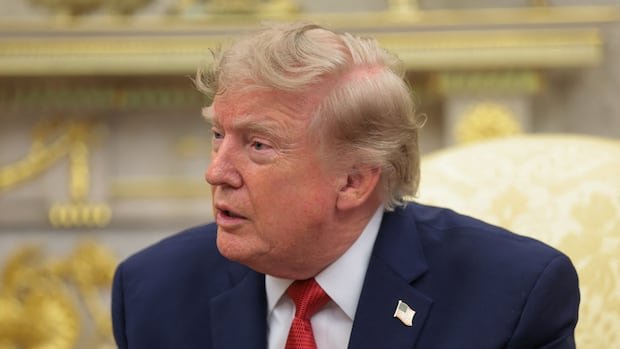

U.S. President Donald Trump made a last-minute announcement on Tuesday, revealing a temporary halt to the imposition of 50% tariffs on various Canadian goods for three days. This decision was shared just before the tariffs were set to go into effect. Initially, Trump mentioned in an online post that he postponed the tariffs due to an apparent deal between Canada and the U.S., pending final document formalization.
A subsequent statement from the White House justified the delay by stating it was in the public interest, citing Canada’s commitment to address trade issues raised by the Trump administration, which had triggered the tariff threats.
Following this, Canadian Prime Minister Mark Carney issued a statement emphasizing the ongoing trade discussions and characterizing the administration’s move as a delay to facilitate further negotiations towards building a stronger domestic economy.
The implementation of the latest round of tariffs, initially scheduled for midnight on Wednesday, encompassed a wide range of products valued at over $28 billion, including items such as plywood, cement, wine, and hockey sticks. The postponement provides breathing room for negotiators racing against the deadline and brings temporary relief to businesses on both sides of the border concerned about the potential adverse impacts on small enterprises, supply chains, and consumer costs.
While the delay offers a respite, the permanency of avoiding tariffs in the long term remains uncertain, as Trump did not indicate whether a finalized deal would lead to the complete cancellation of the tariffs.
Trade representatives from Canada have engaged in multiple rounds of negotiations with their American counterparts in Washington, with intense and delicate discussions described by Carney. Efforts to bridge gaps in negotiating positions continued even after Trump’s announcement, with U.S. Trade Representative Jamieson Greer highlighting the inclusion of market access, economic security commitments, and digital trade alignment in the deal.
Auto tariffs emerged as a significant point of contention, with disagreements persisting over the application of tariffs on Canadian automobile exports to the U.S. Sources familiar with the discussions revealed that the U.S. administration’s tariff threats were a response to Canadian tariffs imposed after Trump initiated trade disputes with Canada in the past.
Both countries remain engaged in intricate negotiations, with Canada exploring potential responses if the tariffs were imposed. Key issues revolve around reciprocal concessions and trade-offs, with Canada pushing for adjustments to U.S. tariffs on various products while aiming for reduced tariff rates and market access improvements for Canadian goods.
The negotiation deadline has been extended, allowing more time for discussions. However, uncertainties loom over the outcome, as businesses brace for potential levies and navigate the volatile trade environment. Amidst the ongoing trade tensions, former Canadian ambassador Bob Rae highlighted the destabilizing effects of the tariff uncertainty on the Canadian economy, emphasizing the need for a resilient response to safeguard Canada’s business interests.