
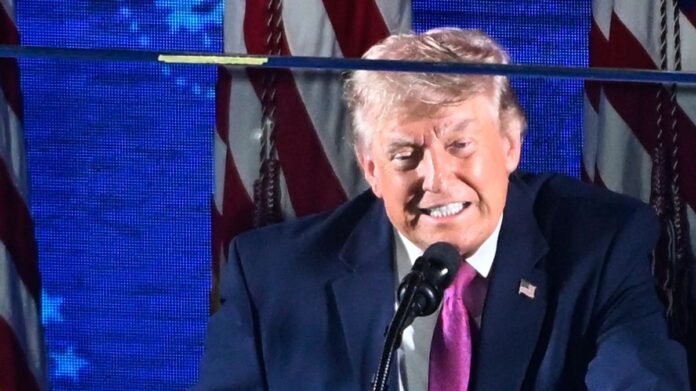

Donald Trump marked the 250th anniversary of America with a highly polarizing speech at Mount Rushmore. The speech, rife with selective historical interpretations and divisive rhetoric, hinted at Trump’s intentions to secure victory in the upcoming midterm elections and exert dominance over his political opponents.
Delivered against the backdrop of the iconic national monument, Trump’s speech emphasized a nativist and ethnonationalist narrative, portraying Americans as a distinct “breed” with roots in ancient civilizations like Athens, Jerusalem, and Rome. However, the speech conveniently omitted significant aspects of American history, including the treatment of indigenous populations and the legacy of slavery.
Trump’s address, which bore the hallmarks of his senior aide Stephen Miller’s ideology, raised concerns about the administration’s increasingly nationalist and authoritarian tendencies. His efforts to push through the controversial “SAVE America Act” bill, aimed at imposing stringent voting restrictions, and his calls to abolish the filibuster to ensure electoral victories, underscored his determination to manipulate the democratic process.
Moreover, Trump’s demonization of political opponents as “communists” and his threats of exiling them highlighted his divisive tactics to rally support and delegitimize dissent. The speech culminated in ominous implications, with Trump hinting at a future where democratic norms and opposition voices could be suppressed in the name of preserving power.
The event was also marred by the presence of a white nationalist group, Patriot Front, marching in Washington DC, showcasing symbols of hate and espousing supremacist ideologies. The convergence of Trump’s incendiary rhetoric and the rise of extremist movements underscored the growing polarization and unrest in the country.
As critics and observers voiced concerns over Trump’s increasingly authoritarian tendencies and divisive tactics, the speech served as a stark reminder of the challenges facing American democracy and the imperative for vigilance in safeguarding its principles.