
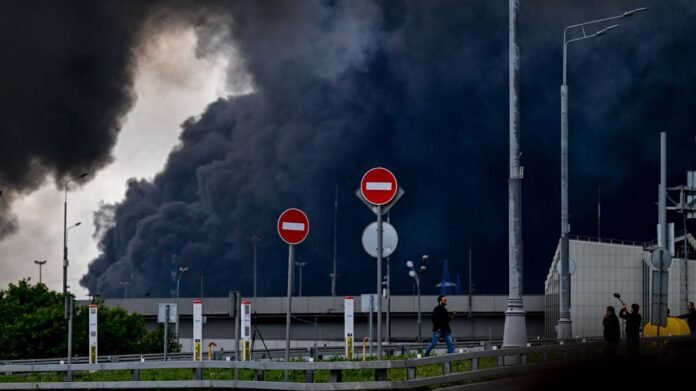

Ukraine launched a significant offensive across multiple regions in Russia, including Moscow and Crimea, in a bold move against Russian President Vladimir Putin. President Volodymyr Zelensky initiated a 40-day intense military operation to pressure Russia to end its aggression towards Ukraine. Reports suggest that Russia might retaliate by targeting Poland or one of the Baltic States for supporting Ukraine. Belarus, an ally of Russia, is reportedly strengthening its border amid pressure from Putin to support Russia’s stalled invasion.
In a strategic move, Ukraine deployed around 660 attack drones to strike various targets in Russia, including a chemical plant in the Tula region. This attack, following Zelensky’s warning to take the war to Russia, marks one of Ukraine’s most significant deep-strike operations to date. Plumes of black smoke were seen over Moscow for the second time in a week, raising concerns of potential Russian attacks on NATO countries.
The targeted chemical plant in Tula is crucial to Russia’s defense industry, producing a range of industrial chemicals used in manufacturing explosives and ammunition. Locals reported hearing explosions and drones overhead, with a lingering smell of ammonia and power outages. Explosions were also reported in Russian-occupied Crimea, near the Kerch ferry crossing, a vital military logistics hub connecting Crimea to mainland Russia.
President Zelensky confirmed attacks on Russian oil refineries in Ufa and a depot in the Krasnodar region, dealing a blow to Russian infrastructure. Intelligence agencies in Eastern Europe suggest that Putin may be planning military provocations against Poland or the Baltic States due to their support for Ukraine. Russia might opt for terrorist-style incidents rather than large-scale attacks, given its frustrations with stalled progress in eastern Ukraine.
Since the invasion of Ukraine, there have been instances of Russian sabotage, including planting firebombs in parcels in the UK, Poland, and Germany. Ukraine’s advanced drone and missile capabilities enable deep-strike attacks over 1,500 miles into Russian territory, posing a significant challenge to Russian defenses.