
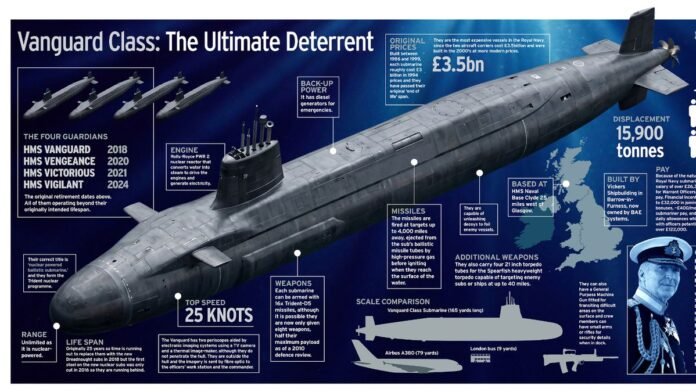

In the depths of the world’s oceans, a formidable Vanguard-Class ballistic submarine silently maneuvers, carrying the UK’s nuclear deterrent capability. Valued at £6 billion, this sleek vessel, capable of reaching speeds up to 25mph, stands as the most potent maritime weapon in the Royal Navy’s arsenal, poised to defend Britain against potential threats.
Operating from a base in Scotland, the four Vanguards have a history of embarking on extended undercover missions lasting up to six months. Recently, HMS Vanguard set a new record with a 204-day patrol, reflecting the trend of increasingly prolonged missions under the Continuous At-Sea Deterrence (CASD) program.
The annual cost of maintaining these submarines on constant patrols across the globe amounts to a staggering £3 billion, sparking ongoing debates regarding the necessity of such a program. Despite the financial implications, proponents argue that the nuclear deterrent plays a crucial role in safeguarding the UK’s national security in an era filled with complex threats.
The crews of these submarines operate with meticulous precision, fully aware of the grave responsibilities that come with their duties. With the ability to unleash devastating force if necessary, these submariners serve as the ultimate deterrent, ensuring Britain’s security in times of crisis.
The exact whereabouts of the Vanguard remain a closely-guarded secret, known only to a select few, including the Prime Minister, who holds the authority to authorize a strike using Trident nuclear missiles in response to a hostile attack. Operating under the MoD’s Submarine Command, these submarines are stationed at HMNB Clyde – Faslane in Scotland, serving as the operational hub for the Vanguard-class fleet.
Since its inception in 1969, the UK’s at-sea deterrent strategy has evolved to maintain a continuous patrol presence, deterring potential adversaries through the threat of retaliation. Linked closely to the US’s nuclear program, Trident remains a critical component of the UK’s defense architecture, despite concerns over its cost and independence.
Looking ahead, the Vanguard submarine system is slated for replacement by the new Dreadnought-class submarines, equipped with advanced technology and poised to serve the UK’s defense needs for the next three decades. As geopolitical dynamics evolve and threats continue to morph, the British military apparatus remains vigilant, preparing for potential conflicts in the coming years.