
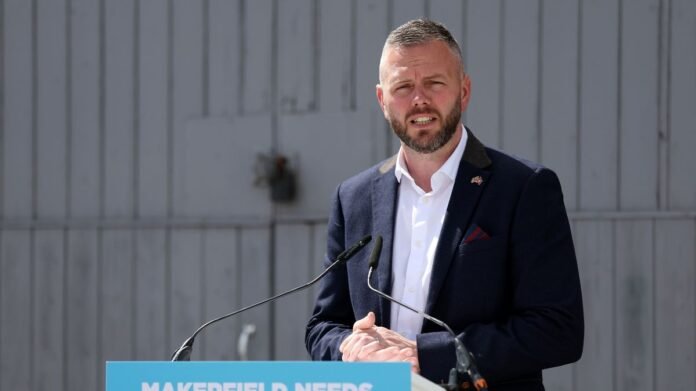

A gathering of women at the Bickershaw Village Community Club in the Makerfield constituency are engaged in discussions over tea and confectioneries. The MissPlaces women’s group, surrounded by sewing machines and crafting materials, are sharing their thoughts on the ongoing election that has attracted various campaigners and media teams to their once tranquil locale. Despite differing political affiliations, they unite in their criticism of the Reform candidate, Robert Kenyon, who has come under fire for his unapologetic stance on misogynistic social media posts and his admission of holding sexist views.
Voicing her disapproval, Theresa Robinson, a widow whose late husband and sons were hailed for their respectful behavior, expresses her concerns about Kenyon’s derogatory remarks towards women, dubbing him ‘Sexist Rob’. Kenyon’s social media content, including offensive comments about women in various contexts, has sparked outrage among local women, who find his lack of remorse troubling.
The refusal of Kenyon to apologize for his controversial statements during a televised debate on BBC Question Time has further fueled the discontent among women voters like Amy Madden from Worsley Mesnes. Madden, a prominent figure in mental health advocacy, condemns Kenyon’s attitude towards women, emphasizing that his views do not align with the values of the community.
Recent polling data reveals a significant gender divide in support for the respective candidates, with Andy Burnham commanding a lead among Makerfield’s female electorate. Kenyon’s perceived disregard for women’s rights and his refusal to acknowledge the impact of his comments have alienated a considerable portion of female voters in the constituency.
The concerns extend beyond Kenyon’s personal conduct to the Reform party’s policy proposals, particularly those related to women’s reproductive rights and mental health support. Amanda Robinson, a key figure in the local community, warns that endorsing Kenyon’s candidacy could jeopardize the progress made in advancing women’s rights and safety within the constituency.
As the election draws near, the spotlight remains on Kenyon’s controversial past remarks and the implications for his campaign. Local residents, both men and women, are vocal in their opposition to Kenyon’s views, with many questioning the suitability of his candidacy in a community known for its strong female leadership.
The upcoming election presents a defining moment for Makerfield, where the collective voice of its residents, especially women, will shape the course of political representation. The decisive role of women in influencing the outcome of the election underscores the significance of their empowerment in the region.