

Tensions rise as the Iran war ceasefire hangs in the balance with both sides preparing for potential escalation, dimming hopes for a quick resolution. US President Donald Trump hinted at a possible settlement in the near future but emphasized the need for caution in negotiations, while Tehran cautioned against expecting immediate lasting peace.
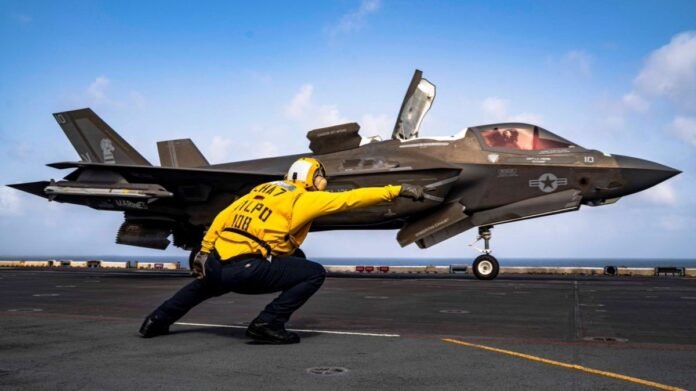
Reports suggest that the conflict could reignite within days, with all involved parties, including Israel, bolstering their military forces. Recent intelligence indicates that Iran has maintained a significant portion of its missile capability and has been enhancing its drone arsenal. Meanwhile, the US military has been restocking its fleet of aircraft carriers and destroyers stationed near the Oman coast since the ceasefire began on April 8.
Military assets, including numerous Boeing KC-135 Stratotanker refueling planes from the US Air Force, have been observed passing through Israel recently. Talks of a potential agreement involve steps like reopening the Strait of Hormuz, lifting the US maritime blockade on Iran, releasing frozen Iranian assets worth around £20 billion, easing sanctions, and setting a 60-day timeline for further discussions on Iran’s nuclear program.
However, concerns remain as Iranian drone production has reportedly resumed amid the ceasefire. While Iran has suffered tactical setbacks, its ability to rebuild key military components quickly could impact the expected timeline for recovery. China and Russia have played significant roles in Iran’s supply chains, leading to a narrowing window for targeted strikes.
Iran’s Foreign Ministry noted progress in talks on various issues but cautioned that a final agreement is not imminent. Speculation surrounds the health status of Supreme Leader Motjaba Khamenei, potentially affecting negotiation timelines. The reopening of the Strait of Hormuz remains a pivotal issue, and the Iran nuclear situation poses a long-term challenge to reaching a comprehensive peace deal.
In the region, the British Type 45 air-defense destroyer HMS Dragon has joined the French Navy’s FS Charles de Gaulle carrier strike group in the Gulf of Aden/Horn of Africa area to bolster security in case the Strait of Hormuz reopens. The conflict, which began in late February, saw France and the UK deploying their naval assets to strategic locations following the ceasefire in early May.
Iran is adamant about retaining control over the Strait of Hormuz and involving Lebanese Hezbollah in any peace agreement, a stance opposed by Israel. The fragile ceasefire, in place since April 7 after the US and Israel’s initial strikes on Iran, offers a glimmer of hope for ending the conflict and restoring stability to the region.
A resolution would alleviate concerns in the region, particularly in Gulf states like the UAE that were targeted by Iranian attacks. It would also facilitate the resumption of global shipping through the vital Strait of Hormuz, crucial for the transport of a significant portion of the world’s oil and natural gas, and pave the way for reconstruction efforts in the war-torn region.