
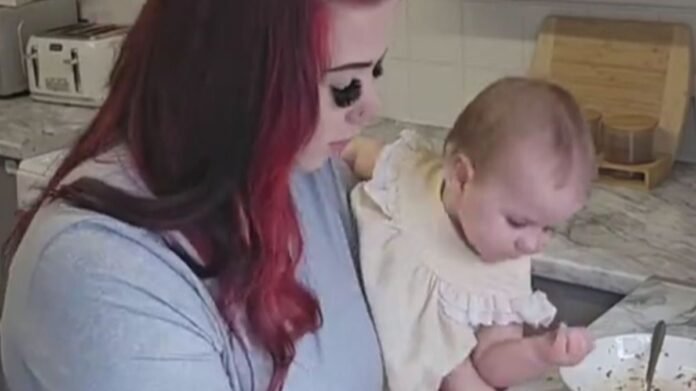

A mother facing financial challenges shared her experience of turning to food banks to provide for her children in their younger years following alarming statistics on child food poverty.
Recent findings by the Education Policy Institute revealed that nearly a quarter of households with children under five in England struggle with food poverty, with preschoolers experiencing higher levels of food insecurity compared to older children.
Meg Bonnie, a 21-year-old mother of two from Nottingham, has been receiving Universal Credit since she was 18. With monthly benefits of approximately £800 for her four-year-old and one-year-old, she has had to rely on food banks in the past to ensure her family’s meals.
Commenting on the distressing statistics, she expressed, “It doesn’t come as a surprise. I’ve had to resort to the food bank a few times and used apps like Olio or Too Good To Go bags. There’s a sense of shame in needing to visit the food bank, feeling judged.”
Acknowledging the financial challenges faced by single-parent households like hers, Meg highlighted the difficulty in budgeting, particularly during school holidays. She emphasized the importance of meal prepping to manage expenses, aiming to spend between £50 and £70 weekly on groceries.
While she noted that her reliance on external help has decreased over time, Meg stressed that rising food prices have made it challenging to sustain a tight budget. She mentioned opting for cost-effective alternatives like store-brand products and long-life milk due to the significant price differences.
The government has announced measures to alleviate child poverty, including lifting the two-child benefits cap and increasing funding for nurseries. A government spokesperson emphasized the commitment to reducing child poverty by enhancing support for families, ensuring access to adequate nutrition, and seeking feedback on proposed initiatives to uplift disadvantaged households.