



This week on Quirks & Quarks with Bob McDonald:
The reason geneticists sent a drone through a whale snot cloud
When humpback whales breathe out, they expel around 90% of the air from their lungs in under a second, creating a spray of mucus that can reach four meters high. Researchers have previously gathered this mucus to analyze proteins, hormones, bacteria, and viruses. However, for the first time, a group of scientists has successfully mapped the entire genomes from the exhalations of humpbacks. Eadin O’Mahony, a marine biologist and geneticist from the North Coast Cetacean Society in British Columbia and St. Andrews University in Scotland, collaborated with the Gitga’at First Nation to use drones equipped with petri dishes over 26 humpback whales. This innovative method proved as effective as traditional techniques and also captured the DNA from the microbes residing in the whale’s respiratory system. The study was published in the journal Molecular Ecology Resources.

Researchers used commercially available drones fitted with petri dishes to gather genetic data from 26 humpback whales as they surfaced. (North Coast Cetacean Society)
Potatoes may be part of astronauts’ diets on future lunar bases
Establishing a base on the moon presents numerous obstacles, with one of the most significant being the need to provide food for its inhabitants. The lunar surface is coated with a fine dust called regolith, which is not suitable for agriculture. Nevertheless, Aymeric Goyer, a plant biologist at Oregon State University, alongside his team, has successfully cultivated potatoes in a blend of simulated lunar regolith and organic compost, suggesting that space-grown potatoes could be a reality by 2040. Their findings were published in npj Microgravity.

At Oregon State University, researchers are cultivating potatoes using a combination of simulated lunar soil known as lunar regolith and organic matter sourced from Earth. (Oregon State University)
Spiders in slumber exhibit REM-like sleep patterns
For the first time, research has documented sleep patterns in spiders. A team, which includes behavioral ecologist Nadja Geiger from the University of Bonn, examined whether spiders actually sleep and if they, similar to humans and other animals, experience various sleep stages. By utilizing high-definition videos of the Australian jumping spider Portia fimbriata, the researchers discovered that the spider undergoes genuine, regulated sleep with two distinct stages, including a REM-like phase characterized by eye movements and muscle twitches. The results were published in the journal PNAS.
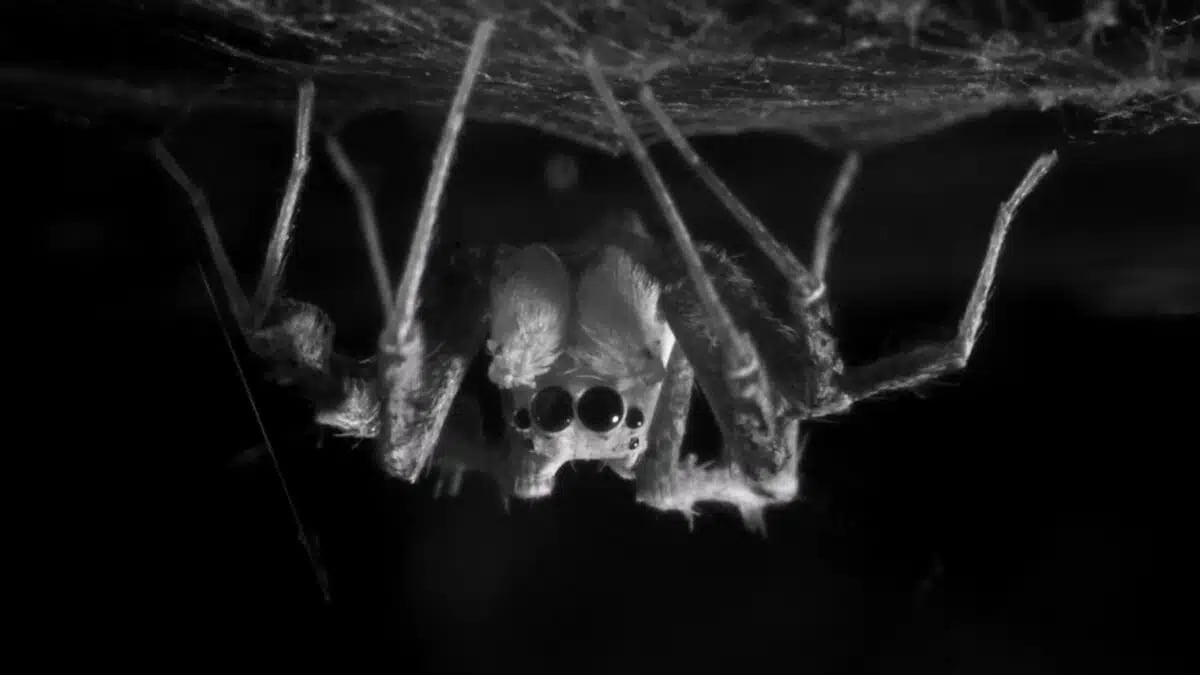
The spider Portia fimbriata in a sleeping position, suspended upside down beneath its web. (Daniela C. Rößler)
Evidence from ancient rocks indicates plate tectonics began 2.6 billion years ago
Large sections of rock, referred to as tectonic plates, move across the Earth’s surface, colliding with one another or separating. This movement can cause catastrophic earthquakes or volcanic activity, elevate mountain ranges, and sculpt our continents and oceans. However, Earth has not always exhibited such dynamics. A recent study published in the journal Proceedings of the Royal Society A reveals that researchers analyzing ancient rocks have identified a chemical signature indicating when this tectonic activity began, which paved the way for life. Janne Liebmann, a geochemist at Curtin University in Australia, along with her team, discovered that this signature was present in rocks dating back to 2.6 billion years ago and then vanished, marking the onset of plate tectonics.

Janne Liebmann and a fellow researcher collecting rock samples in the Western Australian outback. (Bryant Ware)
Common rhythm found in animal communication signals
Male fireflies synchronize their light flashes to attract female mates. However, research on this synchronous activity took an interesting turn when scientists noticed the timing of these flashes aligned with the chirps of nearby crickets. Guy Amichay, an applied mathematician at Northwestern University, was particularly fascinated to learn that many musical compositions maintain a similar tempo. In a recent study published in PLOS Biology, Amichay and his colleagues found that various animal signals cluster around a frequency “hotspot” of approximately two beats per second. Vijay Balasubramanian, a theoretical physicist and computational neuroscientist at the University of Pennsylvania, who co-authored the study, mentioned that neural circuits function at a similar rhythm, indicating that animal brains could be adapted to interpret signals at this specific pace.
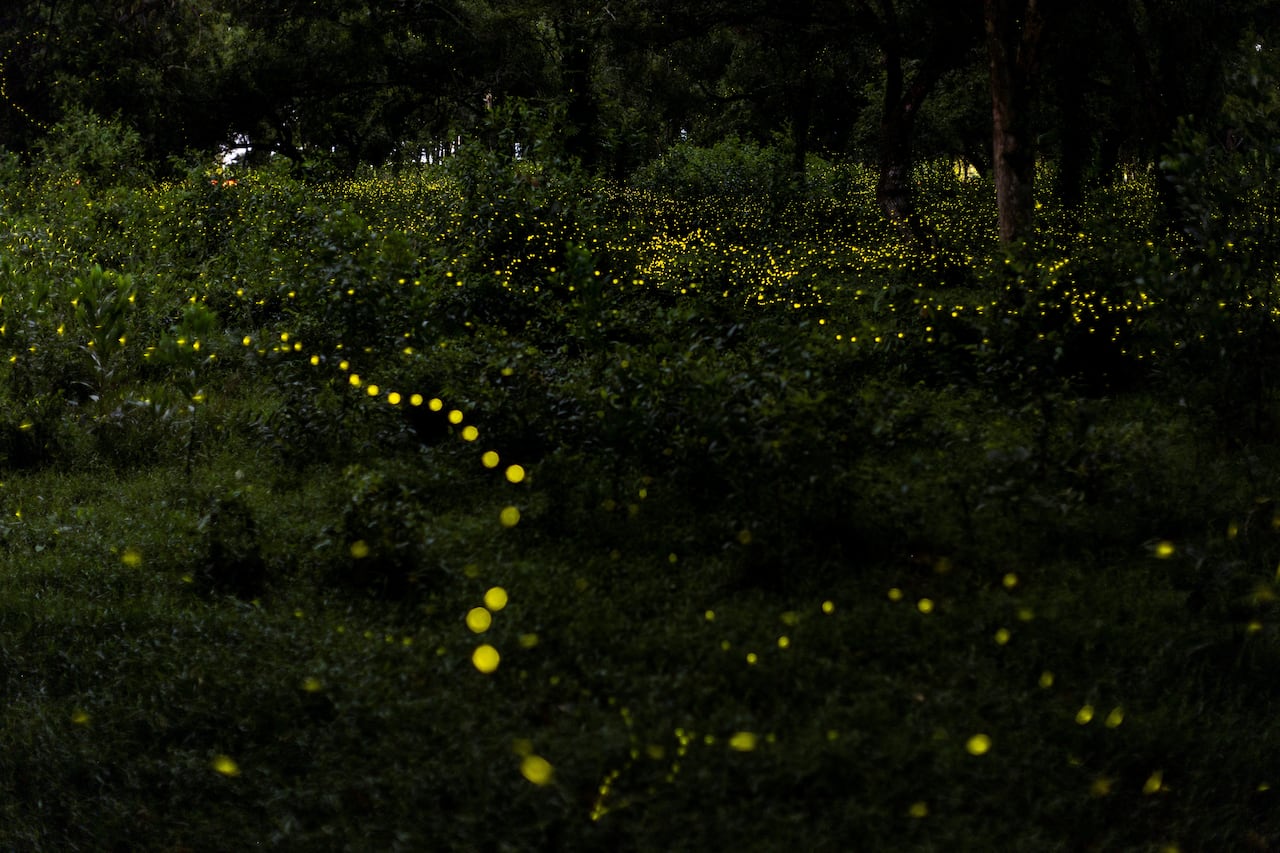
In Thailand, researchers studying firefly swarms observed that crickets were chirping in synchrony with the flashing fireflies. (Athit Perawongmetha/Reuters)
Tag: rewrite-pending