
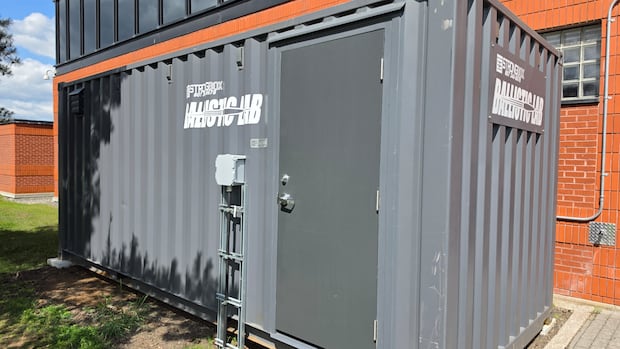

Officials from Thunder Bay police have announced that their newly established ballistics laboratory will significantly reduce the time needed to process firearms-related evidence.
The lab was officially introduced on Wednesday, housed within a container situated at the Thunder Bay police headquarters on Balmoral Street.
Forensic identification sergeant Ryan Doucette of the Thunder Bay police stated that this facility will enable law enforcement to compare “cases and projectiles that are either retrieved from other shooting scenes or from firearms that are confiscated and retrieved by police.”
The lab is equipped with a water tank, which permits officers to discharge firearms and collect the bullets and shell casings. These can then be forwarded to the Centre of Forensic Sciences in Toronto for analysis, allowing for comparisons with evidence obtained from other shooting incidents.
Doucette mentioned that in the past, officers had to send the actual firearm to the center for test firing, which resulted in waiting weeks or even months for the outcomes.
However, with the ability to perform test firings in Thunder Bay now, he explained, “that enables us to obtain results … within days.”
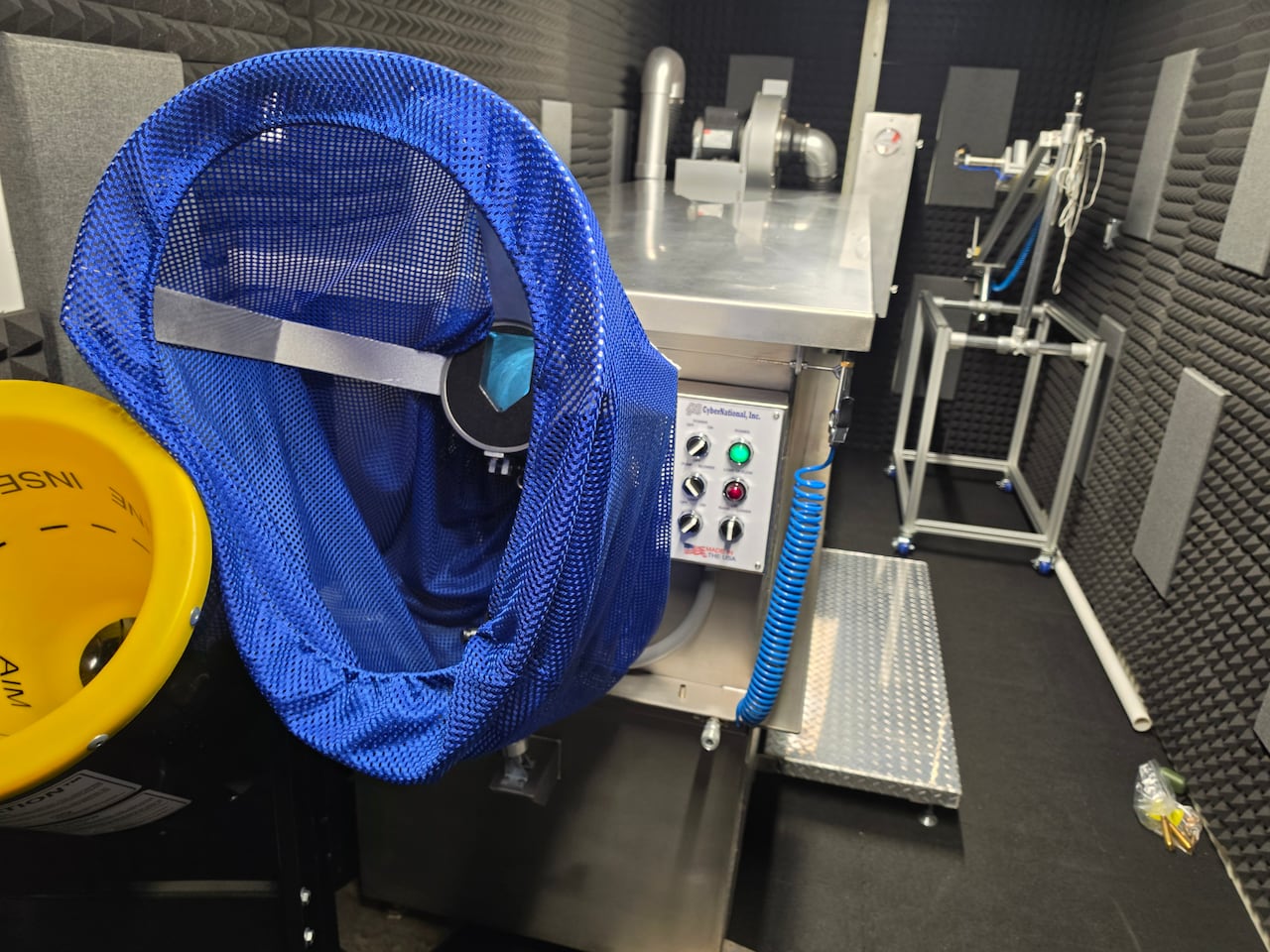
The interior of the new Thunder Bay police ballistics lab. (Kris Ketonen/CBC)
This lab was constructed by Stongbox, a local Thunder Bay company, and was financed through Ontario’s Community Safety and Policing grant.
Deputy police chief Jeremy Pearson remarked, “It significantly improves our capacity to carry out firearms investigations promptly. The reduction in lag time for results is crucial, especially since we are a busy city with a busy police service.”
“The faster we can process evidence from one case, the better we can concentrate on subsequent cases without delays in providing our investigators with the findings of the technical investigation, facilitating the entire process to progress smoothly.”
Pearson noted that there has been a rise in firearms-related incidents within the city over recent years.
“We are handling a much larger volume of exhibits of this nature, which may be linked to crime scenes in other parts of the province,” he added.