
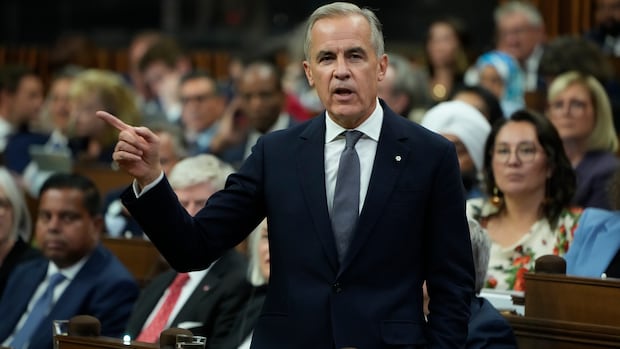

As Parliament prepares to resume its activities, Mark Carney aimed to set realistic expectations.
“We are gathering at a pivotal time for our nation,” the prime minister informed a gathering of Liberal MPs on Friday.
Towards the conclusion of his speech, Carney emphasized to his party that this would be “a vital session of the House of Commons.”
“We will be introducing some of the most significant legislation, not only of this administration but in decades,” he remarked.
The true impact of consequences is typically assessed in hindsight. However, the prime minister’s bold and ambitious predictions seemed to resonate strongly with the current moment.
-
FRONT BURNER
Politics! Parliament’s ‘consequential’ agenda
-
MPs are heading back to Parliament Hill. Here’s what to watch this sitting
-
Carney rallies Liberal MPs as ‘crucial session’ of Parliament set to resume
The broader context Canada is currently experiencing has been evident for roughly 20 months — since the U.S. president began referencing Canada as the 51st state or since he fractured the Canada-U.S. relationship with a series of unjust tariffs. However, in just a few weeks this summer — from the breakdown of trade discussions with the United States in late August to last week’s investment summit and Carney’s speech to the European Parliament — the situation seems to have taken on new urgency and momentum.
With the political climate favoring him, Carney is now promoting a legislative agenda that aligns with the current circumstances.
The Building Canada Strong Act, which was introduced on Monday, could serve as the new focal point of this agenda, but it certainly won’t be the only initiative. New social media regulations, proposed last spring, are still pending discussion. The management of Canada’s largest airports may also be handed over to private entities. Additionally, the Carney administration’s second budget — the first under a majority in the House — is expected to be introduced sometime this fall.
Outside of Parliament Hill, several potentially significant events are on the horizon: a Quebec election scheduled for Oct. 5, a referendum in Alberta on Oct. 19, and a Canada-European Union summit in Montreal on Oct. 29. The Supreme Court is anticipated to deliver a decision regarding the notwithstanding clause, a provincial election in British Columbia could still be called, and as many as six federal byelections may also take place.
However, on the opening day of the fall session, the Official Opposition focused on issues that were more immediate.
The Conservatives aim to reduce your expenses
“To the citizens of Canada,” Conservative Leader Pierre Poilievre stated, addressing the television camera directly, “the Conservative message is that we will strive to reduce your costs.”
A month prior, Poilievre had urged the prime minister to reconvene Parliament immediately so lawmakers could address the escalating trade conflict with the United States. Yet during question period on Monday, it took several attempts for Conservative MPs to raise inquiries regarding the Carney government’s management of counter-tariffs.
Poilievre pressed Carney to recognize that the cost of living — particularly the prices for essentials like housing, fuel, and groceries — remained excessively high. Carney pointed to measures his administration had implemented to tackle affordability issues — including a tax cut, a tax incentive for first-time homebuyers, and an increased GST credit.
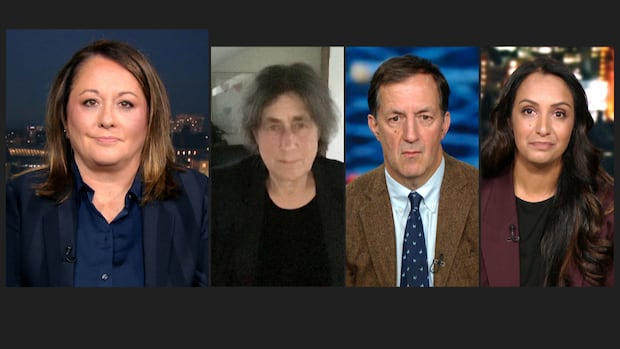
At Issue this week: Prime Minister Mark Carney moves to deepen ties with the European Union, but is it in Canada’s best interest? The Liberals try to lure foreign investment. And Stephen Harper stands behind the decision to walk away from U.S. trade talks.
Poilievre was not convinced — all that Canadians have received from the prime minister, he asserted, “is grand rhetoric on the international stage and hefty bills here at home.” Carney countered that Canadians understood it was the conflicts in Ukraine, the situation in Iran, and a trade war that were driving costs up for them.
Poilievre maintained that federal policies were responsible for the rise in consumer prices. Carney disagreed.
Debating such issues is relevant both practically and politically. The topic of “affordability” could potentially erode support for the Carney administration, much like it did for Justin Trudeau’s government, and might even revitalize Poilievre’s political prospects.
Should the historical narrative remember the autumn of 2026, it will likely highlight more significant events.
A ‘consequential’ legislative agenda begins to take form
It was only during the final intervention of Monday’s question period — the sole opportunity given to an NDP MP — that a specific inquiry regarding the significant legislative agenda was posed to the government.
“Well, Mr. Speaker, the true nature of this government is starting to show,” claimed NDP’s Don Davies, suggesting that the Liberals were poised to infringe on the right to strike with the Building Canada Strong Act.
Jobs Minister Patty Hajdu dismissed Davies’s concerns, and shortly after, her colleague, Transport Minister Steven MacKinnon, introduced Bill C-39, a comprehensive 243-page legislation that modifies environmental regulations, impact assessments, and labor laws.
Speaking to the media outside the House, MacKinnon labeled it the government’s “most substantial piece of economic legislation to date.”
Hajdu noted that the government was “reacting to a crisis” and “doing precisely what Canadians have requested of us.”
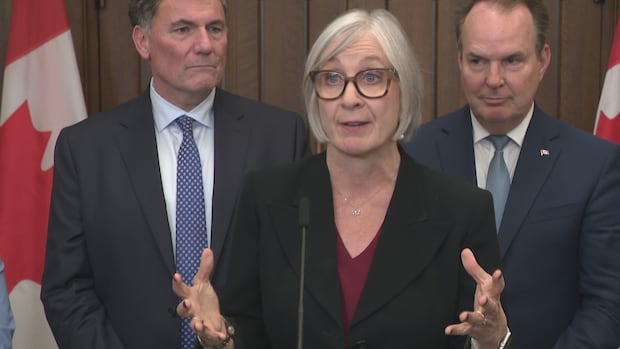
In response to a reporter who suggested that changes to the Canada Labour Code in the omnibus bill tabled by the government Monday will weaken the right to strike, Jobs and Families Minister Patty Hajdu says the bill will ‘raise the bar around accountability’ on both sides of negotiations.
If the question period was any indication, the most vocal opposition to C-39 could emerge from outside the House of Commons — particularly from environmental organizations and labor unions.
Over the past year and a half, Carney has amassed a considerable amount of political capital. This capital is meant to be utilized. The Carney government has also not been especially cautious up to this point.
However, C-39 — along with any other significant measures that may follow this fall — will likely test how effectively this prime minister and his government can handle criticism and dissent, and how well Carney can engage Canadians with an agenda that will not always be met with enthusiasm or unanimous support. Even a wartime leader cannot assume public backing is guaranteed.
It is widely acknowledged that this is — in one way or another — a pivotal time for the country. The scope of these changes is still up for discussion. The ramifications for the Carney government itself remain to be observed.