
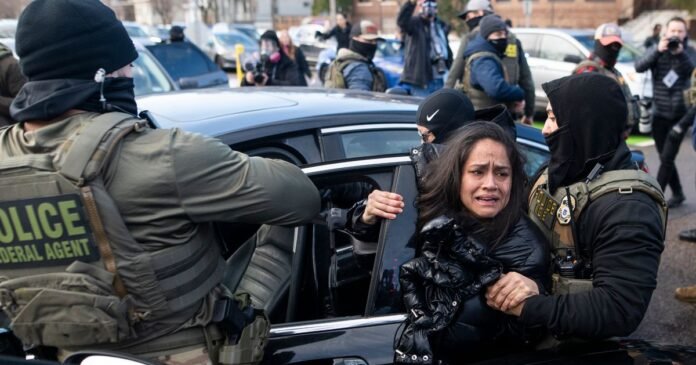

Masked ICE agents engaged in a distressing incident in Minnesota, forcibly removing an unidentified woman from her vehicle amid protests urging her release. This event unfolded near the location where ICE agents had shot Renee Good just days earlier.
The woman implored bystanders for assistance as ICE agents encircled her car, smashing windows, cutting her seatbelt, and extracting her from the vehicle. Video footage captured the woman disputing with agents instructing her to move her car, expressing dissatisfaction with their approach. Despite her efforts to communicate, agents forcefully removed her from the vehicle.
The situation escalated with agents surrounding the car, opening doors as the woman screamed in an attempt to drive away. Eventually, they removed her from the vehicle and restrained her on the ground.
Reports indicate the use of tear gas, flash bangs, and pepper balls against protesters at the intersection of 34th Street and Park in Minneapolis. The matter is now heading to federal court, where Minnesota and two mayors are seeking an injunction against the operation.
In response to escalating immigration enforcement activities, students in Brooklyn Park, Minnesota, staged a walkout in protest. The Department of Homeland Security’s plan to deploy over 2,000 immigration officers in Minnesota prompted legal action by the state, Minneapolis, and St. Paul to challenge the surge, alleging constitutional violations.
Key officials, including the state Attorney General and Minneapolis Mayor, voiced strong opposition to the federal presence, citing significant disruptions to daily life. Nationwide demonstrations and vigils have emerged to honor Good following her tragic death.
Despite criticism and legal challenges, Homeland Security remains steadfast in its enforcement actions, emphasizing its commitment to upholding the law. The Trump administration has defended the ICE agent involved in Good’s shooting, a stance met with skepticism from local leaders and lawmakers.
Efforts to hold federal officers accountable for civil rights violations are being pursued through legislative avenues, albeit facing obstacles in a Congress controlled by Republicans. In Wisconsin, proposals to restrict civil immigration enforcement in specific locations have sparked debates over federal-state dynamics and potential repercussions.
The ongoing clash between federal immigration policies and state resistance underscores the contentious landscape of immigration enforcement in the United States.