

Nearly 500,000 NHS patients spent more than a day in A&E in the past year, according to newly released data. The British Medical Journal’s research revealed that 493,751 individuals spent over 24 hours in emergency departments before receiving further care. Among them, 13,386 patients faced waits of at least three days. The number of patients spending a day in A&E rose by 33% between 2023 and 2025 but has since shown signs of improvement in turnaround times.
Mumtaz Patel, the president of the Royal College of Physicians, expressed concern over the significant increase in prolonged A&E waits, stating that such delays were rare before 2020. The surge in waiting times occurred over a decade of Conservative governance, a period during which waits exceeding 12 hours were unheard of. Official NHS England data highlighted a substantial rise in patients waiting over 12 hours for a hospital bed, from 2,356 in December 2019 to 50,775 in December 2025.
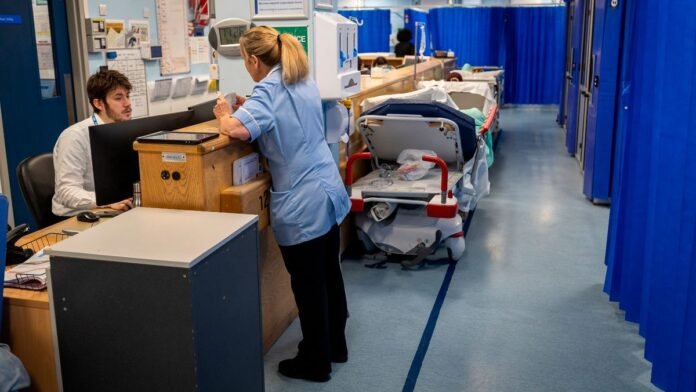
Doctors have voiced their dismay over the extended waits in A&E, with Dr. Den Langhor from the British Medical Association emphasizing the crisis of patients enduring long waits in hospital corridors. He highlighted the undignified and unsafe conditions faced by patients waiting for days on end. NHS England reported a record number of A&E visits in March, driven partly by a meningitis outbreak in Kent, with 2.43 million attendances, a notable increase from previous records.
Acknowledging the challenges, an NHS spokesperson mentioned the ongoing efforts to reform the urgent and emergency care system to address lengthy wait times and inadequate spaces for patients. The Mirror reported on the normalization of “corridor care” since 2022, prompting Health Secretary Wes Streeting to pledge an end to this practice by the upcoming general election.
Nursing union leader Nicola Ranger resigned from a prominent NHS position due to the introduction of corridor care, indicating the detrimental impact it would have on patient care. The NHS faced escalating waits starting in 2015 due to funding constraints, worsened during the Covid pandemic with significant delays in emergency responses.
Prof Ranger revealed how NHS England decided in 2022 to standardize “temporary escalation spaces” for patient care, aiming to expedite ambulance services. The move was seen as a necessary measure to alleviate pressure on emergency services and improve overall efficiency.