
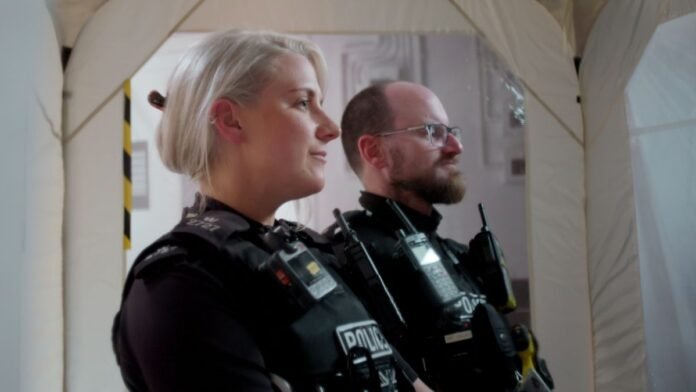

A police officer who arrived at the scene of the Salisbury nerve agent attack was cradling her infant niece when she was informed by colleagues about the potential risk of contamination. PC Alexandra Way, alongside a fellow officer, responded to the incident involving former Russian spy Sergei Skripal and his daughter Yulia, initially mistaking it for a routine call due to the appearance of a drug overdose.
Subsequently, it was revealed that Skripal and Yulia had been exposed to the lethal nerve agent novichok, posing a danger of contamination to others. PC Way shared her experience in an upcoming Channel 4 documentary, recounting the moment she discovered the victims in the town center.
Upon realizing the gravity of the situation, PC Way was shocked to learn the identities of the victims and the potential contamination risk. The officer, who had been holding her two-month-old niece at the time, expressed her panic upon receiving the urgent call to return with all potentially contaminated items.
Sergei Skripal’s background revealed that he had been imprisoned in Russia for espionage before being released in a spy exchange and settling in Salisbury. Both Skripal and his daughter survived the attack after being hospitalized when novichok was found on their doorknob.
Dr. Steve Cockcroft, the ICU consultant who treated the Skripals, initially suspected a drug overdose before the seriousness of the situation became apparent through online research by a police constable. This revelation led to heightened concerns about the incident.
Despite a global warrant for the arrest of three Russian agents allegedly involved in the attack, Russia has refused to extradite them. The incident also tragically claimed the life of Dawn Sturgess, who was exposed to novichok from a perfume bottle left by the attackers. The insensitivity of a senior civil servant’s response to Sturgess’s death was criticized by former Counter Terrorism Police chief Neil Basu.