
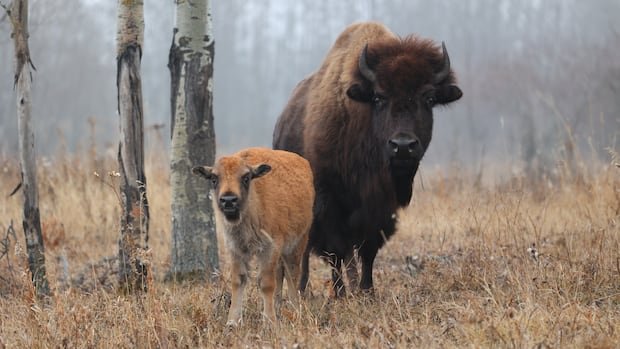

New findings from a recent study shed light on the genetic history of bison, once abundant across North America before facing near-extinction. Scientists sequenced 160 bison genomes, spanning 20,000 years, to trace the evolution of these majestic creatures.
Led by paleogeneticist Jonas Oppenheimer and the Paleogenomics Lab at the University of California, Santa Cruz, the research involved nearly 40 scientists, many from Canada. By examining ancient DNA from fossils and modern herds, the study aims to aid conservation efforts and ensure the survival of bison populations.
The research revealed that the genetic diversity of bison has been significantly impacted by human activities, particularly the intense hunting that decimated their numbers in the late 19th century. Despite surviving with some diversity intact, bison herds are now fragmented and face challenges in maintaining resilience.
The study also highlighted the distinct differences between wood bison and plains bison, showing that the two subspecies diverged around 3,000 years ago due to environmental changes. These genetic insights are crucial for managing bison herds effectively and preserving their unique characteristics.
Collaborative efforts, such as the Bison Integrated Genomics project, are working to conserve bison populations by using genetic data to facilitate matchmaking among isolated herds. By reconnecting these populations, researchers hope to prevent inbreeding and promote genetic diversity, allowing bison to thrive in their natural habitats once again.