
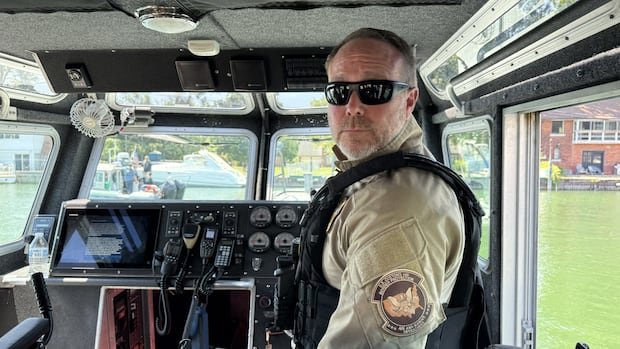

Clad in protective gear and armed, Tim Thayer starts the engines of a U.S. Customs and Border Protection boat on the Detroit River. Thayer, a marine interdiction agent, is part of a team patrolling the Canada-U.S. border in the region. Covering Michigan, Ohio, Indiana, and Illinois, the Detroit sector faces the challenge of a 1,388-kilometer water border with Canada.
A unique aspect of this area is that Windsor, Ont., lies south of Detroit, connected by bridges and a tunnel, with millions of people crossing annually. Thayer keeps a watchful eye on the Windsor shoreline during patrols, monitoring for suspicious activities like smuggling of people, drugs, and firearms between the two nations.
In the past, the Windsor-Detroit corridor was notorious for alcohol smuggling during the Prohibition era. Today, while illegal activities on the Detroit River have decreased, the presence of recreational boaters poses challenges for law enforcement agencies. Intelligence and partnerships are crucial for securing the area effectively.
Recent data shows that U.S. border officials seized significant amounts of illegal drugs, including fentanyl, in the Detroit sector in 2025. However, the direction of drug trafficking remains undisclosed. Additionally, a substantial number of guns recovered in crimes in Ontario were traced back to the U.S., highlighting the issue of firearms being smuggled northward.
Despite claims by President Trump regarding drug trafficking from Canada, statistics reveal a more complex reality. While Canada poses certain security challenges, particularly with staffing and border security, the flow of drugs and weapons between the countries is predominantly northward. The working relationship between U.S. and Canadian border agencies remains intact, emphasizing the importance of cooperation in maintaining border security.
As Thayer observes an RCMP boat passing by with the Gordie Howe bridge in the background, it symbolizes the current state of the bond between the two nations – strong yet strained.