
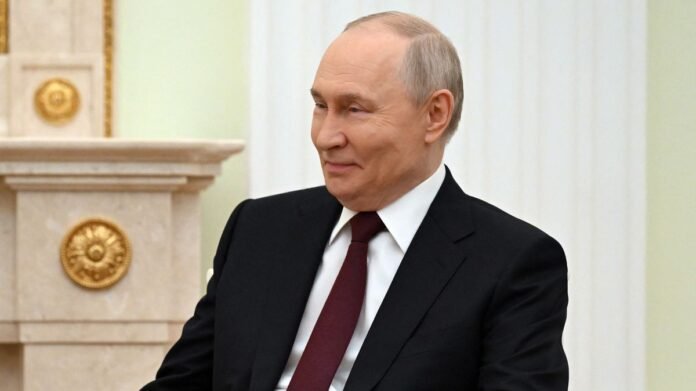

Russian President Vladimir Putin is reportedly considering deploying nuclear weapons in space, raising concerns among US space officials. General Stephen Whiting, the head of US Space Command, expressed worries about Russia’s intentions to pose a threat in space by potentially launching a nuclear anti-satellite weapon into orbit. This move could have devastating consequences, as it could lead to the destruction of a significant number of satellites, disrupting air travel, GPS services, and communication networks. The impact of such an action could be likened to a “space Pearl Harbor.”
The potential detonation of a nuclear bomb at a low orbit could result in the destruction of up to 80% of existing satellites, affecting both military operations and civilian life. Whiting emphasized that Russia’s focus on space activities has largely been geared towards military objectives, such as interfering with western satellites through tactics like GPS jamming, which could hinder support for Ukraine amidst Putin’s controversial invasion.
In an interview with The Times, Whiting highlighted Russia’s pursuit of counter-space weapons and the grave risks posed by placing a nuclear anti-satellite weapon in low Earth orbit. He underscored the critical importance of safeguarding satellites, which play a vital role in various technological functions, including internet and mobile connections. Additionally, Whiting cautioned against Russia’s reckless behavior in space, citing instances of GPS jamming that have impacted civil aviation in Eastern and Southern Europe, potentially endangering civilian aircraft.
While acknowledging the threat posed by Russia, Whiting also pointed out that China represents a significant challenge in space, noting the rapid development of its own arsenal of space weapons, including anti-satellite rockets, GPS jammers, and directed energy weapons. He urged the UK to increase its investment in space capabilities to address the escalating threats posed by Russia and China in this evolving battleground.
Furthermore, the critical role of satellite technology, exemplified by services like Starlink owned by Elon Musk, has proven indispensable in supporting Ukraine’s defense efforts against aggressive actions by Putin. The fast and reliable internet connectivity provided by low-orbiting satellites has been crucial for facilitating communication and coordination within Ukraine’s forces during the conflict.
In conclusion, the escalating tensions in space underscore the urgent need for countries to enhance their space capabilities and security measures to mitigate the risks posed by potential weaponization of outer space by adversarial nations.