
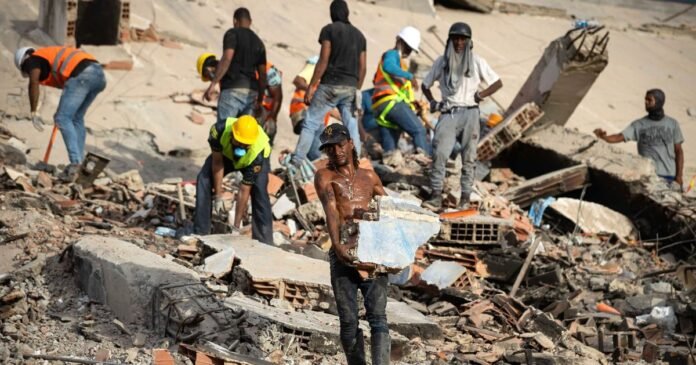

Time is quickly running out for any potential survivors trapped under the debris following the destructive earthquake in Venezuela, as the death toll steadily rises. According to the latest official figures, over 1,700 individuals have lost their lives in the recent dual quakes, with an additional 69,000 persons still unaccounted for.
President Delcy Rodríguez described the event as the most severe natural disaster in Venezuela’s history. The focus has now shifted to addressing the emerging humanitarian crisis, with thousands now homeless due to the earthquakes, leading to the emergence of makeshift shelters in Caracas.
Prior to the catastrophe, Venezuela was already grappling with significant financial and political challenges. The country now faces an estimated $6.7 billion (£5 billion) economic burden as a result of the disaster.
A moderate tremor with a magnitude of 4.6 struck north of Caraballeda on Venezuela’s Caribbean coast. Experts emphasize the crucial importance of the initial 72 hours post-disaster for rescue operations, although survival chances can be prolonged with access to essential resources like food and water.
Questions linger on whether the financially strained government can effectively coordinate the necessary relief efforts for the numerous injured and homeless individuals in the aftermath of the twin quakes. Temporary camps are being set up to accommodate Venezuelans who lost their residences, as announced by Acting President Delcy Rodríguez.
The Red Cross has highlighted the dire conditions in La Guaira, where earthquake victims are grappling with the lack of basic services like water and electricity. The devastation has been particularly severe in the ‘barrios’ of Caracas, resembling Brazilian favelas, where many fragile homes were impacted.
Venezuela’s military is playing a key role in aid distribution and maintaining security in the affected regions. They are guarding collapsed establishments to prevent looting and ensuring essential services are accessible to the affected population.
The exposure to harsh weather conditions due to homelessness is exacerbating the existing public health crisis post-earthquake. Healthcare services in Venezuela are facing significant challenges, including issues with forensic services, casualty tracking, and missing persons registration.
The World Health Organization has warned of critical healthcare gaps in Venezuela, raising concerns about potential disease outbreaks following the earthquakes. Vaccine-preventable diseases and vector-borne illnesses pose an increased risk to the population in the aftermath of the disaster.