
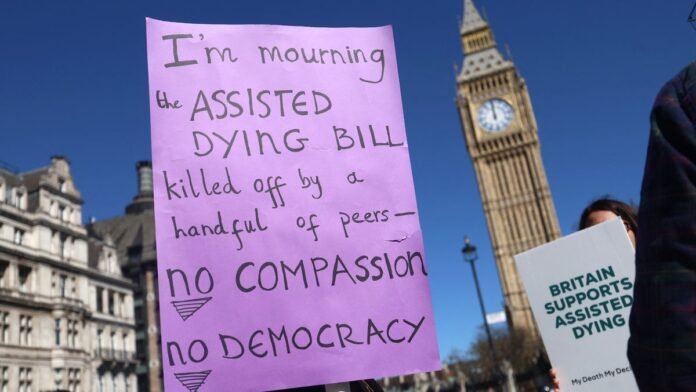

Assisted dying advocates express disappointment as House of Lords blocks proposed law change
Campaigners for assisted dying have voiced their despair after the House of Lords thwarted a potential change in the law, stripping them of hope. The significant Terminally Ill Adults (End of Life) Bill faced a time constraint on Friday, effectively halting its progression in this Parliamentary session. During the final debate in the House of Lords, impassioned arguments were presented from both sides, with opponents deeming the bill unsafe and unfeasible. Despite receiving support from Members of Parliament, the bill failed to advance due to time constraints.
Kim Leadbeater, a Labour MP leading the charge on the Bill, expressed determination to reintroduce the proposal after the King’s Speech on May 13. Leadbeater conveyed a mix of confidence and sadness, acknowledging the public outcry over the bill’s setback. Rebecca Wilcox, the daughter of Dame Esther Rantzen, lamented the missed opportunity for the bill to aid her mother, who is battling stage 4 lung cancer and has opted to join the Swiss Dignitas organization.
Various campaigners, including Sophie Blake and Catie Fenner, shared their disappointment over the bill’s failure to pass. They highlighted the importance of the legislation in providing terminally ill individuals with the choice to end their suffering with dignity. The emotional debate also involved testimonies from individuals like Lord Cashman, who recounted June Brown’s plea for assisted death, and Baroness Campbell of Surbiton, who raised concerns about the bill’s potential impact on disabled individuals.
The Care Not Killing campaign group, represented by Gordon Macdonald, criticized the bill as deficient and unviable, emphasizing the need for thorough scrutiny. The House of Lords’ decision to block the bill has sparked widespread frustration among supporters, who vow to continue advocating for the rights of individuals facing terminal illness.